

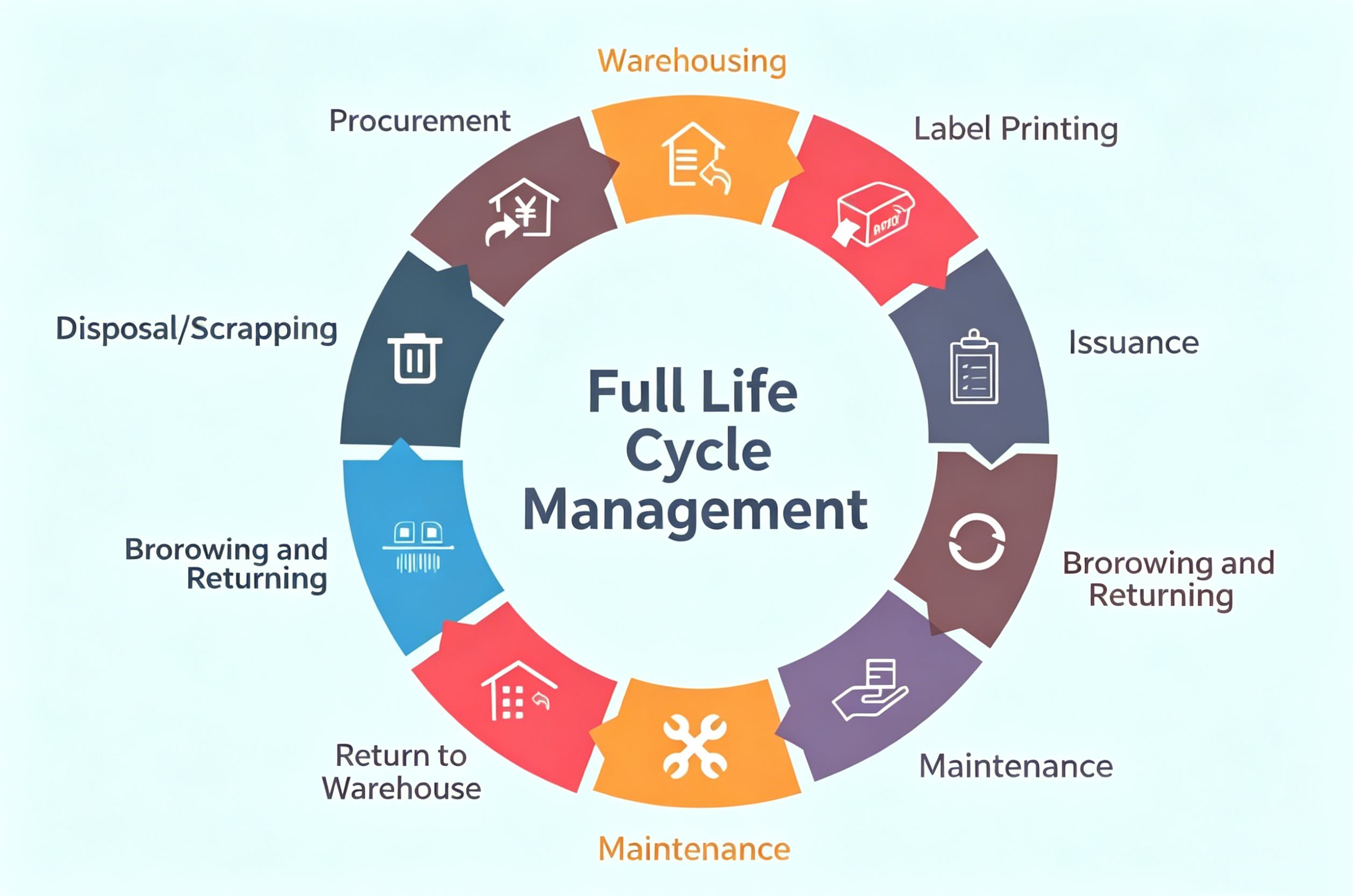
Many people jump straight in and ask: Can our company use RFID? How do we configure it?
But I want to start with a more important question: Why do you need RFID technology to manage fixed assets?

1> Asset Loss is High
Equipment lent out is promised to be returned next week, but in the rush, no return record is made. By the time you remember, the item has ended up with someone unknown. Or when an employee leaves, asset handover isn't done properly, and when you need the equipment later, it simply can't be found.
2> Records and Physical Assets Never Match
Thousands of assets on the books, but only a few hundred are actually in use. A piece of equipment was scrapped long ago, but the ledger still shows it as in use. The physical count never matches the records every time.
3> Duplicate Purchases, Massive Idle Stock
Buying new equipment while old equipment gathers dust in corners – duplicate purchases waste costs.
4> Inventory Takes Overtime
Assets are scattered across various departments and different buildings. Manually counting them one by one is time-consuming, labor-intensive, and prone to errors.
If you have any of the above pain points, then you need to set up RFID fixed asset management.
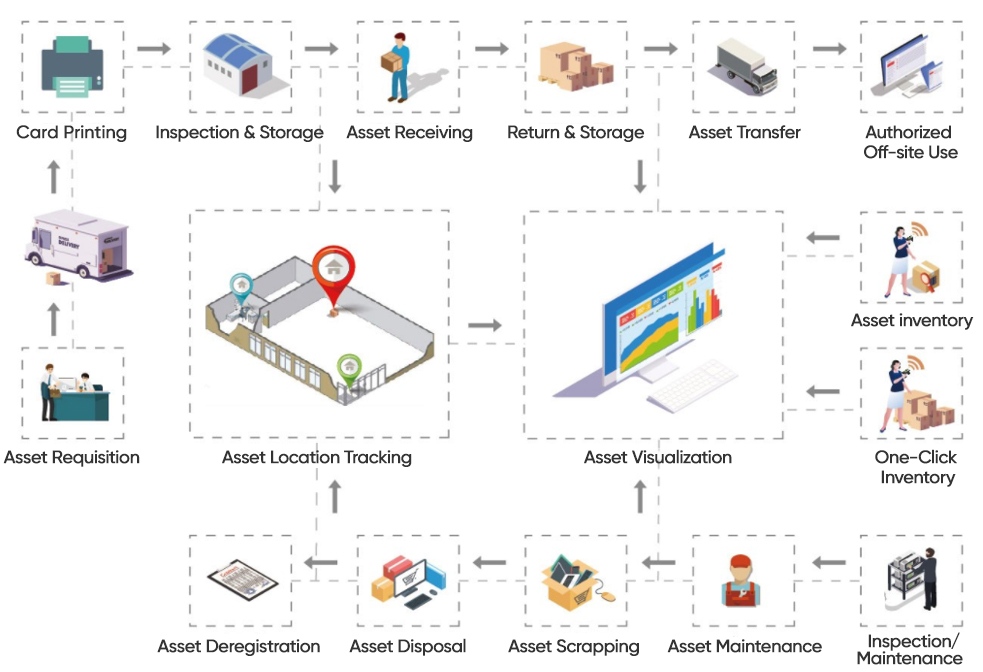
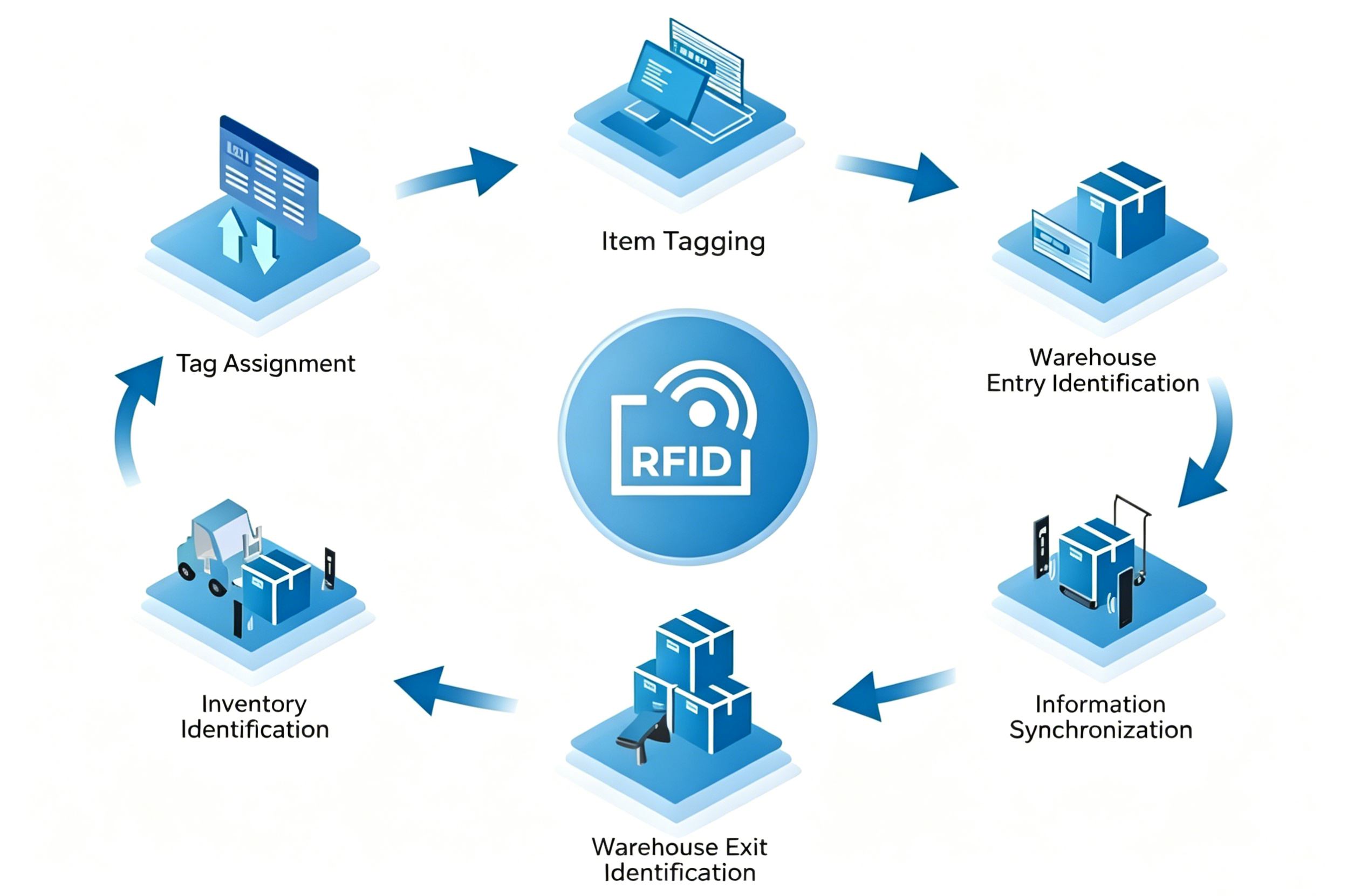
Once RFID fixed asset management is set up, here is the complete usage process to give you an overall picture:
Next, I will explain in detail how to set it up.
RFID Fixed Asset Management System
An intelligent fixed asset management platform based on RFID technology, achieving real-time consistency and dynamic supervision of accounts, cards, and physical assets throughout the entire asset lifecycle.
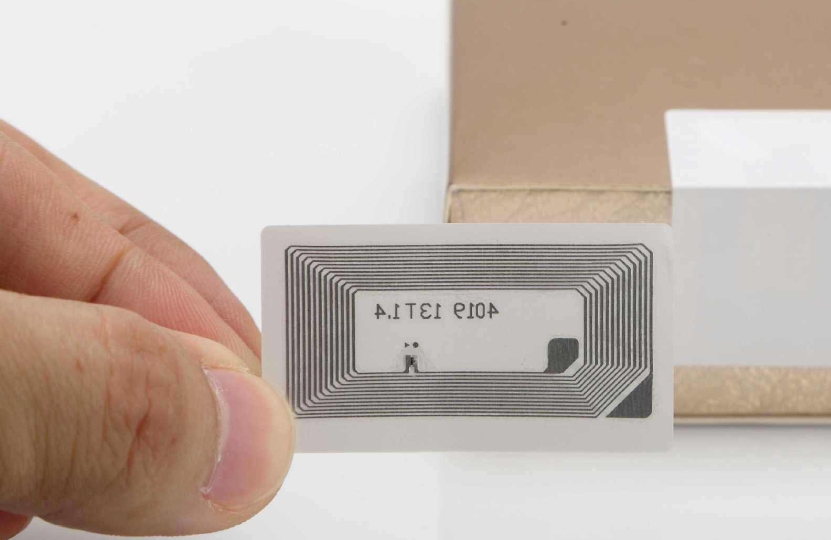
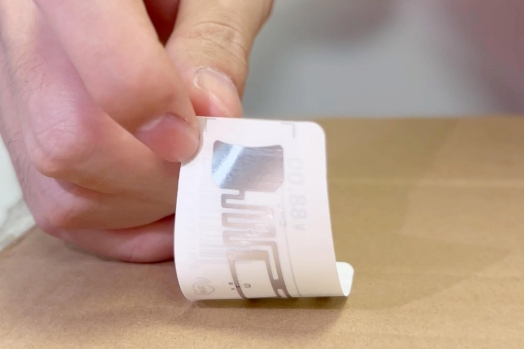
Attached to assets as a unique electronic ID, supporting contactless, batch reading.
Used for on-site asset inventory, batch identification, and quick searching, supporting offline data collection and synchronization with the system.

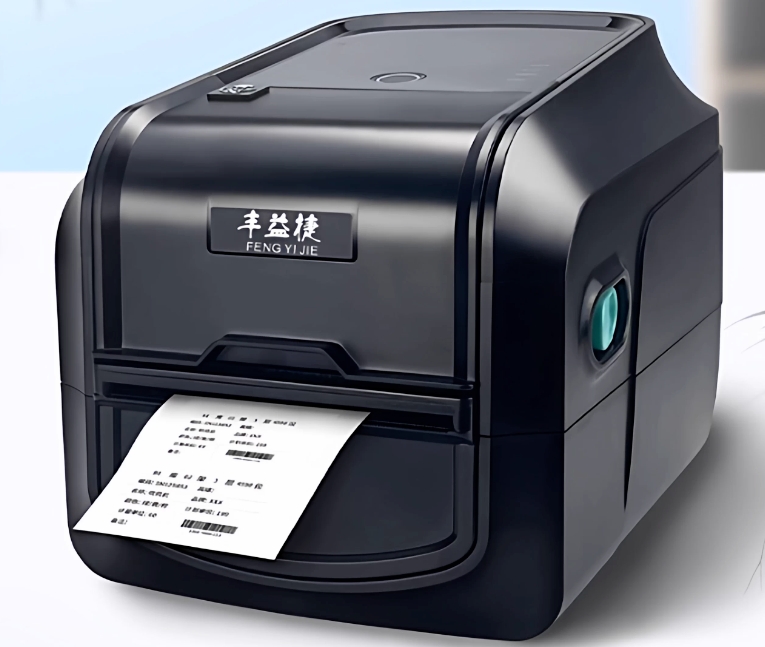
Completes the information input for asset electronic tags and integrates visual information printing, ensuring accurate tag data and uniform format.
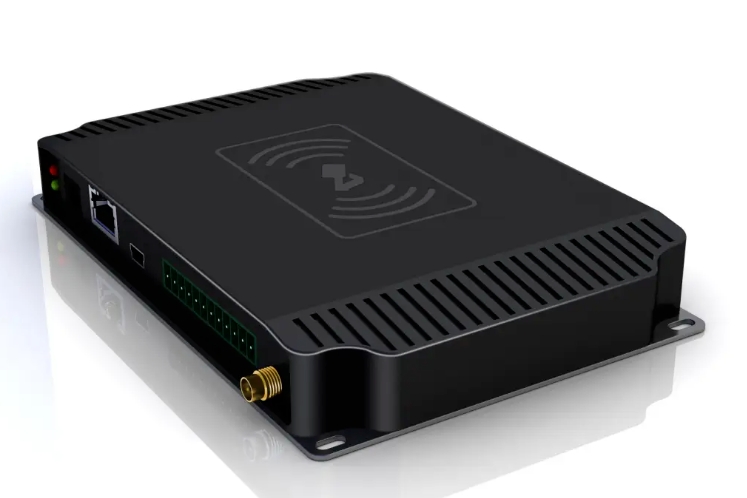
Fixed RFID Reader (Optional)
Deployed in key asset storage areas or workstations, automatically reads tags for real-time monitoring of critical areas, suitable for high-value assets.
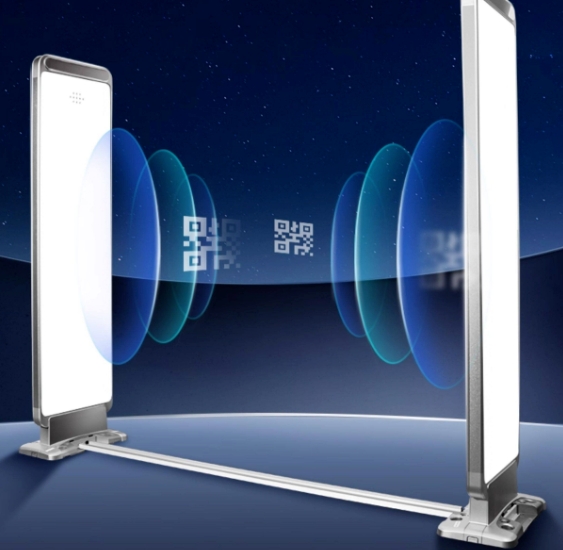
Installed at entrances/exits of warehouses, server rooms, or offices, automatically records asset movement and determines authorization status, providing immediate alarms for unauthorized removal.
1. Requirements Analysis and Planning
2. Tag Application – One Item, One Code Management
After printing the RFID electronic tags with an RFID printer, attach them to the corresponding fixed assets.
Note:
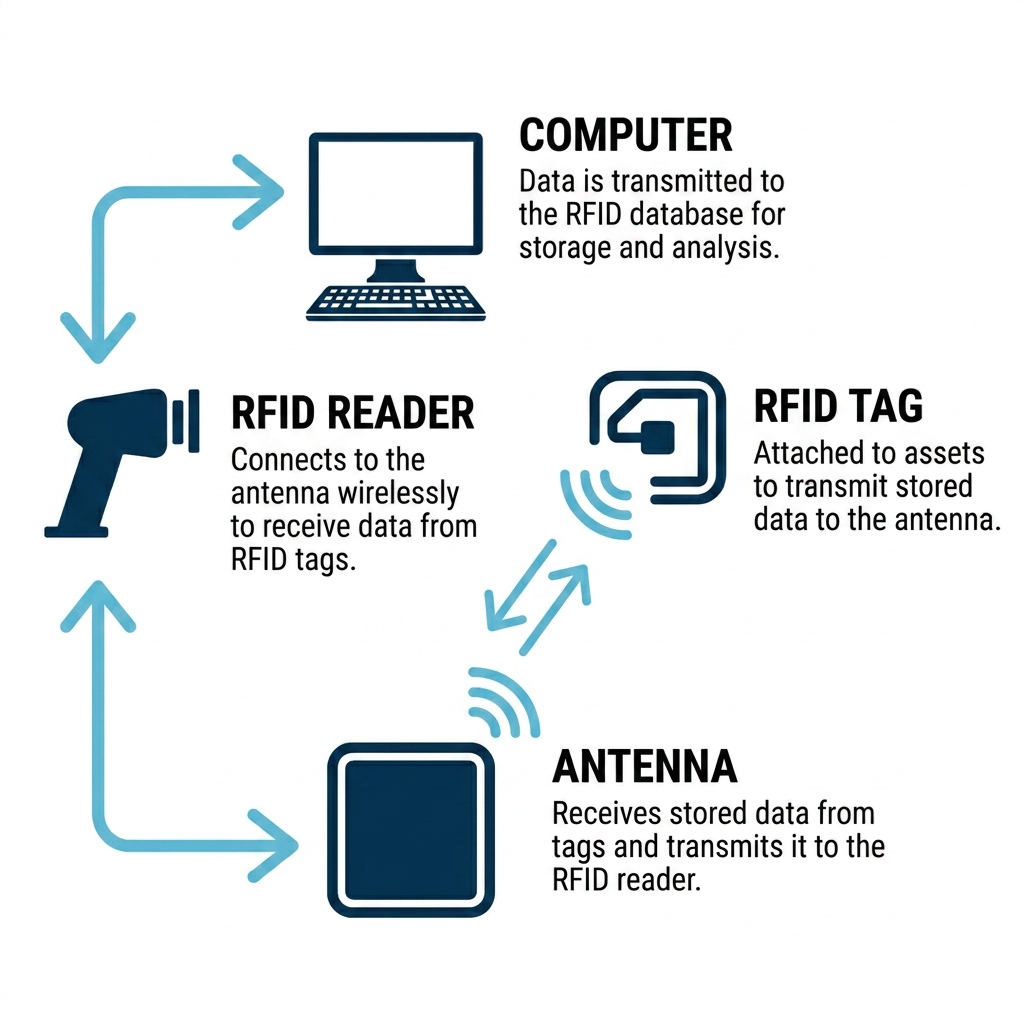
Connect RFID equipment with the RFID fixed asset management system to ensure real-time data synchronization.
Data collected by the RFID fixed asset management system on loans, returns, transfers, disposals, etc., is automatically synchronized with the system.
Integration method: Follow the RFID service provider's guidance for deployment, which typically takes 1-3 days to complete.

Inventory efficiency improved by 90%: No need for one-by-one scanning; the system can simultaneously read hundreds or thousands of tags from a distance. This saves 76% in labor costs compared to traditional methods.
Physical-record matching rate of 99.9%: Through unique item coding that breaks down information silos, the physical-record matching rate can be increased to 99.9%.
Automated closed-loop processes: Full lifecycle online recording from issuance to disposal, ensuring traceable movement paths.
Improved asset utilization rate: Identify and redeploy idle assets through data analysis, avoiding duplicate purchases.
Setting up RFID fixed asset management can eliminate inventory errors and mismatches between records and physical assets, achieve fully automated tracking and real-time alerts, ensure accurate asset data and traceable movements, and comprehensively improve the efficiency and utilization rate of asset management.

Hi! Click one of our members below to chat on
 en
en 


 IPv6 network supported