banner

Blog

Home

Blog

  • The FYJ Standard: Securing National Assets with 3A-Rated, GJB & ISO-Certified Solutions
    The FYJ Standard: Securing National Assets with 3A-Rated, GJB & ISO-Certified Solutions
    May 12, 2026
    Introduction: The High Stakes of Institutional Asset Management In the public sector—be it a national military command, a prestigious university, or a government ministry—fixed assets represent more than just financial value; they represent operational readiness and public trust. When assets like high-precision lab equipment, tactical gear, or critical IT infrastructure go missing or are poorly managed, the consequences range from budget deficits to compromised national security.   In this high-stakes environment, "commercial-grade" solutions often fall short. This is why FYJ has pivoted the industry toward a new benchmark: Military-Grade Integrity. By organically integrating GJB 9001C (China's Military Standard) with a globally recognized ISO certification suite, we provide a SaaS and hardware ecosystem that is literally "battle-tested."     I. The GJB 9001C Standard: Why Military-Grade Matters for Civilian Assets Most asset management vendors focus on "features." At FYJ, we focus on "Protocols."   Our GJB 9001C certification is not merely a badge for hardware durability; it is a rigorous Quality Management System (QMS) that governs our entire R&D and manufacturing lifecycle.   Zero-Failure Logic: In military logistics, a data error can be catastrophic. We apply this same logic to our SaaS architecture. Every asset entry, depreciation calculation, and location update is subject to multi-layer verification. Environmental Resilience: While we aren't listing specific PDA parameters here, the GJB standard ensures our hardware components are built to withstand the humidity of tropical regions in Africa and the high altitudes of Latin America, ensuring your "integrated solution" doesn't fail when the environment gets tough.   II. The "Five-ISO" Synergy: Building a Fortress for Your Data Managing fixed assets via SaaS requires a level of trust that only a Fully Certified provider can offer. FYJ’s organic integration of five core ISO standards creates a synergistic "Security Fortress" for our clients:   ISO 27001 (Information Security): This is the gold standard for our SaaS platform. It ensures that sensitive institutional data—including asset locations, procurement costs, and personnel assignments—is encrypted and protected against cyber threats. ISO 20000 (IT Service Management): Software is only as good as its uptime. This certification guarantees that our SaaS support and cloud maintenance meet professional international benchmarks, ensuring 24/7 availability for mission-critical operations. ISO 9001, 14001, & 45001: These ensure that our integrated solutions are produced under a system that prioritizes quality, environmental sustainability, and occupational health. For international tenders, these are often the "entry tickets" that prove a vendor's global maturity.     III. Sector-Specific Solutions: From Schools to Sovereignty   1. Educational Institutions: Managing the Micro and the Macro Universities manage a chaotic mix of assets—from thousands of student tablets to multi-million dollar research microscopes. FYJ’s integrated solution uses the "Military Precision" mindset to automate audits. By deploying our SaaS-linked RFID technology, a single administrator can audit an entire laboratory in minutes rather than days, ensuring research grants are accounted for with 100% accuracy.   2. Government & Public Agencies: Accountability & Transparency For government bodies in developing regions, the shift to SaaS is about Accountability. Our system provides an immutable audit trail. When a laptop is assigned or a vehicle is decommissioned, the "GJB-level" precision ensures that every transaction is timestamped, geotagged, and irreversible, directly supporting national anti-corruption and transparency initiatives.   3. Defense & Security: Beyond Inventory In military applications, our system tracks the Readiness of assets. By integrating maintenance schedules into the lifecycle management module, we ensure that critical equipment is not just "present" but "functional," meeting the operational standards required by national security forces.   IV. Trust the Enterprise, Not Just the Product In a global market flooded with short-term vendors, FYJ stands as a National High-Tech Enterprise and a China 3.15 Integrity Brand. Our Class 3A Credit Rating is a testament to our financial stability and ethical commitment.   When a government or a school chooses FYJ, they aren't just buying a software license; they are partnering with a stable, credible entity that will be there for the next decade of their digital transformation journey. We don't just provide a tool; we provide a Legacy of Reliability.   National High-Tech Enterprise China 3.15 Integrity Brand Class 3A Credit Rating   Conclusion: The Future is Integrated The era of fragmented asset management is over. The future belongs to solutions that are Organically Integrated—where military-grade hardware talks seamlessly to ISO-certified SaaS. FYJ is proud to lead this charge, bringing the world's most rigorous quality standards to the institutions that need them most.   FAQ: Professional Fixed Asset Management & Military-Grade Compliance   Q1: Why should my institution choose a GJB 9001C (Military Standard) certified solution over commercial ones? A: Commercial-grade software often lacks the rigorous data verification and hardware durability required for high-stakes environments. GJB 9001C certification ensures that FYJ’s integrated solutions meet China’s military quality protocols, providing zero-failure logic in data synchronization and extreme resilience in hardware performance—essential for military logistics, government infrastructure, and research labs. Q2: How does FYJ’s SaaS platform ensure the security of national or institutional data? A: Security is our top priority. Our SaaS ecosystem is ISO 27001 (Information Security) and ISO 20000 (IT Service Management) certified. This means we employ national-level encryption for data transmission and storage, coupled with professional-grade uptime monitoring, ensuring your asset data is protected against both cyber threats and service interruptions. Q3: Can your integrated solution work in remote areas with unstable internet (e.g., rural schools or border posts)? A: Yes. Understanding the infrastructure challenges in regions like Africa and Latin America, FYJ’s solutions feature an "Offline-First" capability. Our PDA hardware can record asset audits and location changes offline; the data is securely cached and automatically synced to the ISO-certified SaaS cloud once a connection is restored. Q4: What is the benefit of "Organic Integration" between software and hardware? A: Most vendors act as resellers, combining third-party software with generic hardware, which often leads to "data silos" or lag. FYJ’s solutions are Organically Integrated, meaning the hardware (PDA/RFID) and the SaaS software are developed under the same ISO 9001 quality umbrella. This ensures seamless communication, faster scanning speeds, and a single point of accountability for maintenance. Q5: How can we trust the long-term support and stability of FYJ as a vendor? A: Stability is verified by our credentials. FYJ is a National High-Tech Enterprise with a Class 3A Credit Rating and is recognized as a China 3.15 Integrity Brand. These are not just awards; they are third-party verifications of our financial health and commitment to ethical business, guaranteeing our clients long-term software updates and hardware support for 10+ years. Q6: Does FYJ’s asset management system comply with international accounting and reporting standards?   A: Absolutely. Our system is designed to meet global standards such as IFRS and GAAP for asset depreciation and financial reporting. Combined with our ISO 20000 service protocols, we provide the professional reporting modules necessary for auditing and transparency in government and educational sectors.    
    Read More
  • Wireless Pick-to-Light Revolution: Ending the Warehouse "Search Crisis" in 2026
    Wireless Pick-to-Light Revolution: Ending the Warehouse "Search Crisis" in 2026
    May 08, 2026
    Introduction: The Invisible Killer of Logistics Productivity   In the high-stakes world of "half-hour delivery" and global e-commerce, the warehouse is no longer just a storage space—it’s a high-speed engine. However, even the most advanced supply chains are being stalled by a silent killer: The Search Crisis.     Recent market research by Gartner indicates that labor efficiency remains the top priority for supply chain leaders. In many manual warehouses, staff spend up to 30-50% of their shift simply looking for items. Whether it’s a parcel in a crowded "last-mile" station (like a Cainiao pick-up point) or a critical component in a massive distribution center, the traditional method of reading tiny labels is failing. The solution? A visual revolution known as the Pick-to-Light (PTL) Revolution.   What is the Wireless Pick-to-Light Revolution? Traditional PTL systems were wired, expensive, and rigid. The modern revolution is driven by Wireless Sound and Light Finding Tags—IoT-enabled devices that turn the chaotic search process into a simple, guided experience.   By integrating these smart tags with a cloud-based SaaS asset management platform, the warehouse management system (WMS) can "light up" the exact location of a required item instantly. However, for a PTL system to be truly enterprise-ready, it must meet the "Golden Triad" of performance: Speed, Accuracy, and Endurance.   Pillar I: The Need for Sub-Second Speed (<1s) In a Micro-Fulfillment Center (MFC), every second is a line item on the balance sheet. According to Forbes Technology Council, low-latency communication is the backbone of the next industrial era.   The <1s Standard: Many conventional IoT tags suffer from a "wake-up" latency of 3-5 seconds. Our tags are engineered for sub-second response (<1s). Operational Impact: This near-instantaneous light and sound feedback ensures that the picking flow remains fluid. Shaving off just 3 seconds per pick in a facility handling 10,000 parcels daily saves over 8 hours of labor every day.     Pillar II: 99.9% Accuracy—The Only Way to Scale When managing 100,000+ SKUs, a 5% failure rate is not just an inconvenience; it’s a disaster. Reliability is the foundation of trust between a worker and their tools.   Ironclad Reliability: We have optimized our proprietary wireless protocols to ensure a response accuracy of over 99.9%. Reducing Reverse Logistics: Inaccurate picking is a leading cause of Reverse Logistics costs. By ensuring the correct tag lights up every single time, we virtually eliminate mis-picks, saving enterprises thousands in return shipping and customer dissatisfaction costs.     Pillar III: The Math of 10,000 Tags (1-Year+ Battery Life) The most overlooked cost in Enterprise Asset Management (EAM) is "Battery Maintenance Fatigue."   Long-Term Endurance: Our tags are designed for extreme energy efficiency, providing a service life of over one year on a single cycle. TCO Optimization: If a tag only lasts 6 months, a warehouse with 10,000 tags faces the burden of replacing 50+ batteries daily. By extending battery life to over a year, you align maintenance with annual cycles, drastically reducing the Total Cost of Ownership (TCO).     Solving the Labor Crisis: "Zero-Training" Onboarding The logistics industry faces a global labor shortage. High turnover means managers are constantly training new staff.   Follow the Light: With Sound and Light tags, the learning curve is eliminated. A new hire can reach peak productivity on day one by simply "following the light." This is the ultimate solution for seasonal surges and high-turnover environments.     Conclusion: From "Searching" to "Instantly Finding" The Pick-to-Light revolution is not just about flashing lights; it’s about data-driven efficiency. By combining the macro-benefits of IoT with the micro-precision of <1s speed and 99.9% accuracy, we are helping logistics hubs turn their "Search Crisis" into a competitive advantage.   Stop searching. Start finding.   FAQ Q: What is the response time of your finding tags? A: Our tags respond in less than 1 second, ensuring instantaneous feedback for high-speed logistics. Q: How accurate is the pick-to-light system? A: The system maintains a 99.9% response accuracy, virtually eliminating picking errors. Q: What is the battery life? A: The tags offer a battery life of over one year, minimizing maintenance costs for large-scale deployments.    
    Read More
  • On-Premise to Cloud: Why SaaS is the Future of Fixed Asset Management in 2026
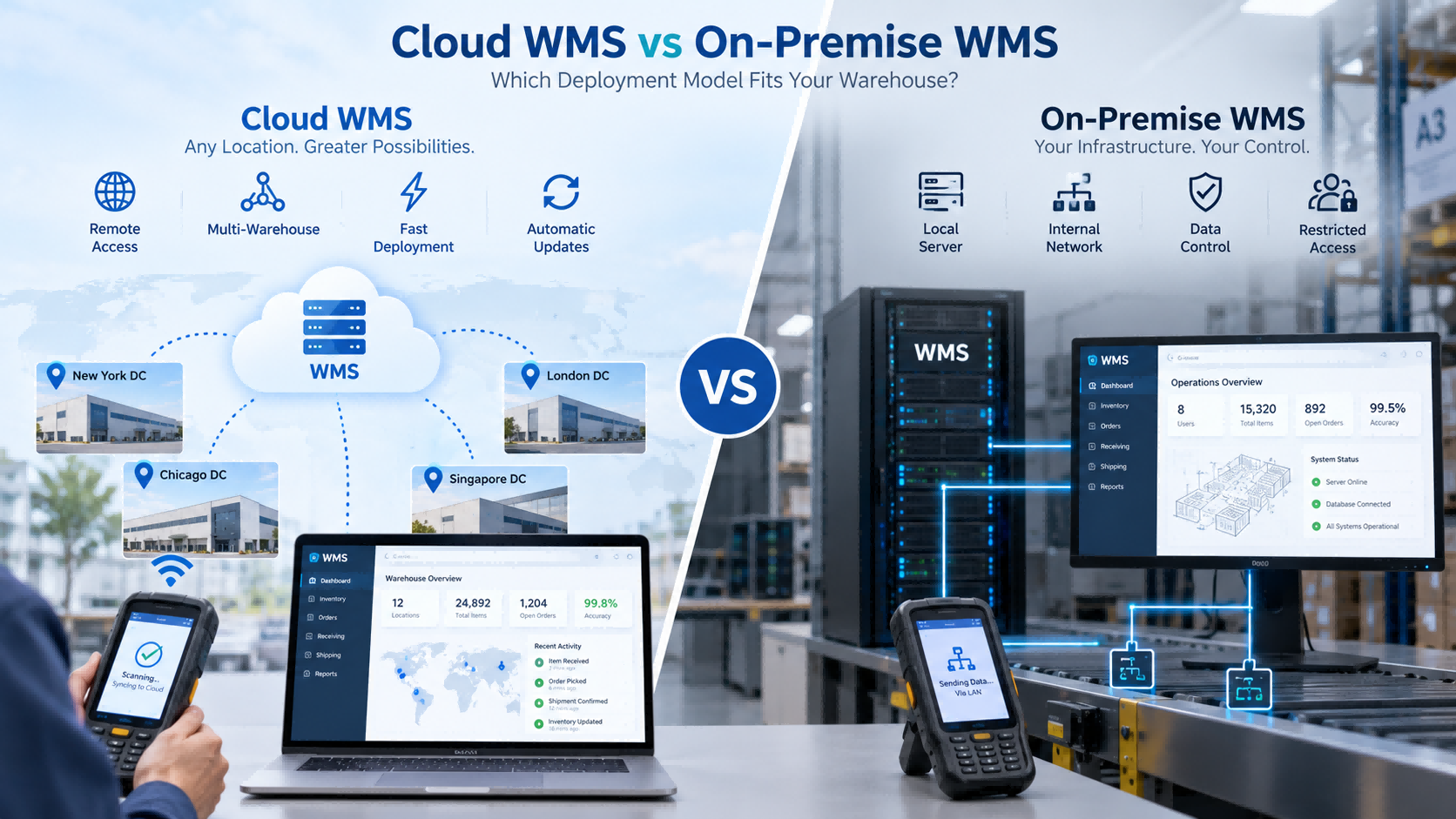
    On-Premise to Cloud: Why SaaS is the Future of Fixed Asset Management in 2026
    Apr 30, 2026
    Introduction   For decades, Fixed Asset Management (FAM) was tethered to local servers, managed via clunky on-premise installations or risk-prone spreadsheets. However, the tide has turned. As digital transformation accelerates, Forbes reports that the shift from on-premise to SaaS (Software as a Service) has become a strategic imperative for enterprises seeking agility and resilience. But why is the cloud winning? Let’s explore how SaaS is redefining how businesses track, manage, and optimize their physical assets.   1. Rapid Deployment: From Months to Minutes   Traditional on-premise systems require hardware procurement, server setup, and manual installation—a process that can take months. According to Gartner’s latest cloud forecast, the speed of public cloud adoption is driven by the need for immediate operational capacity.   Instant Access: Organizations can initialize their database and start tagging assets almost immediately. Scalability: The cloud scales with your growth without needing a hardware upgrade, a feature critical for global expansion.   2. Automatic Updates and Compliance One of the biggest pain points of on-premise software is version obsolescence. In the financial sector, staying current with accounting regulations is non-negotiable. SaaS models provide Continuous Delivery, ensuring your system always complies with evolving standards such as IFRS 16 Leases and ASC 842. Users receive the latest security patches and features automatically, eliminating the need for costly manual IT migrations.   3. Real-Time Global Collaboration In a post-pandemic world, business happens everywhere. On-premise systems often create "data silos" limited to the local office network. SaaS breaks these barriers:     Cross-Regional Access: A CFO in London can review asset depreciation reports from a factory in Singapore in real-time. Mobile Computer Integration: Using mobile computer apps to scan QR codes or RFID tags ensures data is synced instantly. This connectivity is the backbone of modern Enterprise Asset Management (EAM) as defined by industry leaders like IBM.     4. Strategic Cost Shift: CAPEX to OPEX The transition to SaaS fundamentally changes the financial structure of IT investments. It shifts costs from CAPEX (Capital Expenditure) to OPEX (Operating Expenditure). By removing the burden of maintaining physical servers, cooling, and specialized on-site IT staff, businesses can redirect capital toward core revenue-generating activities.     5. Enhanced Data Security and Disaster Recovery Contrary to old myths, the cloud is often more secure than local servers. Data from the Cloud Security Alliance (CSA) suggests that top-tier SaaS providers offer security protocols and encryption levels that most individual enterprises cannot afford to maintain on their own. With automated redundant backups, your asset data remains safe and recoverable even in the event of a local hardware failure.   Conclusion The migration from on-premise to SaaS is no longer just a trend—it is a baseline for competitive operation in 2025. By embracing a cloud-first approach, companies gain the transparency and scalability needed to turn their fixed assets into a strategic advantage.   Is your business ready for the cloud? Contact us today for a demo of our SaaS Fixed Asset Solution.   Explore the future of immutable asset tracking:   Official Website: www.fyjaidc.com   Industry References & Standards:   SaaS Industry Trends: Forbes Cloud Computing Market Forecast:Gartner  IFRS 16 Leases Official Standard:IFRS Foundation ASC 842 Leases Official Standard:FASB Enterprise Asset Management (EAM) Definition:IBM  CAPEX vs. OPEX: Key Differences:Investopedia The State of Cloud Security:Cloud Security Alliance   Frequently Asked Questions (FAQ)   Q1: What is the main difference between on-premise and SaaS fixed asset management? A: On-premise software is installed locally on your company's servers and requires manual maintenance. SaaS (Software as a Service) is hosted in the cloud, offering automatic updates, remote access via mobile devices, and a subscription-based pricing model instead of large upfront costs.   Q2: Is my asset data secure in a SaaS system? A: Yes. Reputable SaaS providers use enterprise-grade encryption and host data in tier-1 data centers (like AWS or Azure) that often have higher security standards than local business servers. They also provide automated backups to prevent data loss.   Q3: How long does it take to migrate from an old system to the cloud? A: While on-premise setups can take months, a SaaS transition can be completed in weeks. The process typically involves cleaning your existing data, importing it via bulk upload tools, and configuring user permissions.   Q4: Can SaaS asset software help with IFRS 16 or ASC 842 compliance? A: Absolutely. Modern SaaS platforms are designed to handle complex lease accounting. They automatically calculate depreciation and Right-of-Use (ROU) assets, ensuring your financial reports always meet the latest international standards.   Q5: Will I still have access to my data if the internet goes down? A: Most SaaS asset tools offer mobile apps with offline modes. You can perform audits or update asset statuses without a connection; the data will automatically sync to the cloud once you are back online.  
    Read More
  • The Synergy of RFID and Blockchain: Building Immutable Asset Records for the 2026 Global Economy
    The Synergy of RFID and Blockchain: Building Immutable Asset Records for the 2026 Global Economy
    Apr 22, 2026
    In the rapidly evolving industrial landscapes of Southeast Asia, Latin America, and Africa, two major challenges continue to plague high-value asset management: counterfeiting and data tampering. As supply chains become more complex and decentralized, the traditional "trust-based" system is failing.     By 2026, the convergence of RFID technology and Blockchain has emerged as the definitive solution. By combining the physical identification power of RFID with the cryptographic security of Blockchain, enterprises are finally achieving a fast fixed asset tracking system that is not just efficient, but "tamper-proof."   1. The Trust Gap: Why RFID Alone is No Longer Enough     RFID has revolutionized the speed of inventory, but as a standalone technology, it has a vulnerability: the centralized database. If a database is hacked or an employee manually alters the records, the "truth" of an asset’s history is compromised.   This is where the World Economic Forum (WEF) identifies Blockchain as the missing link. When an asset is scanned, the data isn't just stored on a local server; it is hashed and recorded on a distributed ledger. This creates an "Immutable Audit Trail"—a history that cannot be deleted, altered, or forged.   2. Eliminating Counterfeiting and Gray Markets     For industries dealing in high-value electronics, medical devices, and heavy machinery, gray market leakage—where authentic products are diverted or fakes are introduced—costs billions annually.   A report by IBM Blockchain highlights that the "Physical-to-Digital" link is the most critical part of supply chain security. By using an enterprise RFID asset management system integrated with a private or hybrid blockchain, every asset receives a unique "Digital Twin."   Authentication: When an asset is scanned using a professional handheld RFID reader for inventory, the system verifies its unique ID against the blockchain ledger in milliseconds. Chain of Custody: Every change in ownership or location is time-stamped and signed, ensuring that "ghost assets" or unauthorized duplicates are instantly flagged.   3. Financial Integrity and Audit Compliance (IFRS Standards)     The financial world is demanding higher transparency. The IFRS Foundation through its new sustainability and digital disclosure standards, is pushing firms toward data-backed financial reporting.   In 2026, an enterprise RFID asset management system backed by blockchain provides a "Single Source of Truth" for auditors. When Deloitte Asia-Pacific or other global auditors verify a firm’s balance sheet, they no longer have to rely on manual spot checks. They can verify the cryptographic proofs of every asset’s existence and condition, significantly reducing the cost of compliance and the risk of financial penalties.   4. Regional Impact: Securing Assets in Emerging Markets   The demand for fast fixed asset tracking systems is particularly high in regions like Vietnam, Brazil, and Nigeria, where infrastructure is expanding rapidly. However, these regions often face higher risks of asset theft and administrative errors.   Southeast Asia: As a global electronics hub, securing components via RFID-Blockchain prevents "part-swapping" and ensures that high-end manufacturing equipment remains within authorized zones. Latin America & Africa: In the mining and energy sectors, tracking expensive tools and machinery across remote sites requires a decentralized record that doesn't rely on a single, vulnerable central server.   5. The Role of Hardware: The Secure Gateway   The handheld terminal is the bridge between the physical asset and the immutable ledger. For a blockchain-RFID system to be effective, the hardware must be more than a simple scanner; it must be a "Secure Gateway."   Utilizing a professional handheld RFID reader for inventory ensures that data is captured accurately and encrypted at the "Edge" before being sent to the blockchain. In 2026, these devices feature advanced processors capable of handling the cryptographic signatures required for blockchain transactions, ensuring that the "Physical-to-Digital" handoff is seamless and secure, even in rugged industrial environments.   6. Implementation Roadmap: 5 Steps to Immutable Tracking     Step 1: Digital Identity Definition Assign every asset a unique cryptographic ID linked to a specific UHF RFID tag. Step 2: Ledger Selection Determine whether your enterprise RFID asset management needs a Public, Private, or Consortium Blockchain based on your industry's privacy requirements. Step 3: Deployment of High-Gain Infrastructure Ensure that your fast fixed asset tracking system uses readers with high-performance antennas to capture data from 10+ meters away, preventing scanning gaps. Step 4: Smart Contract Automation Program "Smart Contracts" to automatically trigger actions—such as maintenance alerts or insurance updates—whenever an asset is scanned by a handheld RFID reader for inventory. Step 5: Auditor Integration Provide read-only access to your blockchain ledger for external auditors, enabling real-time, continuous auditing.   Conclusion: Future-Proofing with Physical-Digital Synergy   The combination of RFID and Blockchain is not just a technological trend; it is the new infrastructure for global trust. By 2026, businesses that can prove the history and authenticity of their assets will command higher market value and lower operational risk.   At FYJ, we are dedicated to providing the hardware and software foundations for this new era of transparency. Our solutions are designed to turn your asset management into a competitive strategic asset.   Explore the future of immutable asset tracking:   Official Website: www.fyjaidc.com Industry References & Standards: Blockchain Supply Chain Insights: IBM Blockchain Global Digital Identity Standards: World Economic Forum (WEF) Sustainability & ISSB Reporting: IFRS Foundation Emerging Market Trends: Deloitte Asia-Pacific RFID Technical Standards: RAIN RFID Alliance   Frequently Asked Questions (FAQ)   Q: Does Blockchain make RFID scanning slower? A: No. Modern fast fixed asset tracking systems use "Side-chains" or "Hashing" to ensure that the scanning process remains near-instant, with the heavy cryptographic work happening in the background. Q: What industries benefit most from RFID-Blockchain synergy? A: Industries with high-value, high-risk assets, such as Medical Devices, Luxury Goods, Aviation, and Industrial Machinery in Southeast Asia and Latin America. Q: How does this prevent "Ghost Assets"? A: Since every scan is recorded on an immutable ledger, an asset cannot "disappear" from the records without a signed disposal event. If an asset hasn't been scanned in the expected location, the system flags it immediately.    
    Read More
  • Passive IoT: Why Battery-Free Real-Time Tracking is the New Standard for Industrial Asset Management in 2026
    Passive IoT: Why Battery-Free Real-Time Tracking is the New Standard for Industrial Asset Management in 2026
    Apr 20, 2026
    For decades, the industrial world faced a persistent paradox in asset management: to achieve real-time visibility, you needed active, battery-powered tags; but at scale, the cost and labor of maintaining thousands of batteries became an operational nightmare.   As we enter 2026, a technological breakthrough has resolved this dilemma. Passive IoT asset tracking—the ability to achieve high-speed, real-time visibility without a single battery—has moved from a futuristic concept to an industrial requirement. For enterprises across Southeast Asia and beyond, this shift represents the most significant ROI opportunity in the history of supply chain digitization.   1. What is Passive IoT? The Death of "Battery Anxiety"     At its core, Passive IoT refers to sensors and tags that harvest energy from their environment—primarily from radio frequency (RF) waves emitted by readers. According to the RAIN RFID Alliance, this technology allows for trillions of everyday items to be connected to the internet at a fraction of the cost of traditional active systems.   In 2026, the primary driver for adoption is the total elimination of battery maintenance. In massive manufacturing hubs like those in Vietnam and Indonesia, managing 50,000 fixed assets with active Bluetooth (BLE) tags meant replacing 100+ batteries every single day. With battery-free RTLS solutions, the maintenance cost drops to zero, and the lifespan of a tag extends to over a decade.   2. The Shift to Battery-Free RTLS (Real-Time Location Systems)   Historically, Real-Time Location Systems (RTLS) were expensive, niche solutions. However, a report by IDTechEx predicts that the market for Passive IoT will surge as UHF RFID technology evolves to provide near-real-time location data.   By integrating a fast fixed asset tracking system with high-gain infrastructure, companies can now locate high-value machinery, IT assets, and industrial tools with meter-level accuracy. This "Passive RTLS" allows managers to see their entire factory floor in a digital twin interface without the infrastructure overhead of older, battery-dependent systems.   3. Why Southeast Asia is the Proving Ground for Passive IoT   Southeast Asia’s manufacturing sector is currently undergoing a "digital leapfrog." As highlighted by ABI Research, the region is uniquely positioned to adopt Passive IoT because of its rapid industrialization and the need for high-density asset tracking in tropical climates.   The high humidity and temperature fluctuations in Thailand and Malaysia often degrade battery performance in active tags. Passive IoT asset tracking, being purely electronic and encapsulated, is far more resilient. This makes it the ideal choice for the "China Plus One" production zones where uptime is the only metric that matters.   4. Hardware Synergy: The Role of the Professional Reader     Achieving "Battery-Free" real-time visibility requires a sophisticated hardware ecosystem. The tags may be passive, but the "intelligence" sits in the reader.   A professional handheld RFID reader for inventory acts as a mobile gateway for the Passive IoT ecosystem. In 2026, these devices are no longer just "scanners"; they are edge-computing terminals capable of processing thousands of tag signals per second. When a worker walks through a facility with a high-performance handheld reader, they are essentially "lighting up" the passive environment, capturing a comprehensive audit of every fixed asset within range—even those hidden inside crates or behind walls.   5. Financial Impact: ESG and Resource Efficiency     Beyond operational speed, enterprise RFID asset management is now a critical component of ESG (Environmental, Social, and Governance) strategies. Digitalizing asset lifecycles is a key recommendation from the IFRS Foundation for modern financial transparency.   Zero Battery Waste: By moving to battery-free RTLS solutions, a large enterprise prevents tens of thousands of lithium batteries from entering landfills every year. Ghost Asset Elimination: Real-time visibility ensures that the balance sheet is 100% accurate. No more paying taxes or insurance on equipment that no longer exists. Optimized Capex: When you know exactly where your assets are and how often they are used, you stop over-purchasing equipment, leading to a significant reduction in capital expenditure.       6. Implementation Roadmap: Transitioning to Passive IoT   Phase 1: Infrastructure Assessment Determine if your facility requires fixed overhead readers for constant monitoring or if a mobile-first approach using a handheld RFID reader for inventory is more cost-effective for your current scale.   Phase 2: Tag Selection for Harsh Environments In industrial zones, assets are often made of metal or stored in high-interference areas. Selecting RAIN RFID-compliant anti-metal tags is crucial for ensuring the success of your fast fixed asset tracking system.   Phase 3: Software Integration (The Digital Twin) Ensure your enterprise RFID asset management software can handle the high-velocity data influx of Passive IoT. The software should provide a visual dashboard showing real-time asset movement and historical usage patterns.     Phase 4: Pilot and Scale Start with a high-value asset category—such as server racks or production molds—to prove the ROI before scaling the battery-free solution across the entire enterprise.   7. The 2026 Competitive Edge: Data-Driven Audits   The final benefit of the Passive IoT era is the "Zero-Labor Audit." In the past, auditing 5,000 assets took a week of manual labor. In 2026, using a fast fixed asset tracking system, it takes 90 minutes.   This 90% reduction in audit time is not just a productivity gain; it allows for weekly instead of annual audits. This level of frequency provides a data granularity that was previously impossible, allowing for AI-driven predictive maintenance and unprecedented supply chain agility.   Conclusion: Future-Proofing with Passive IoT Southeast Asia’s industrial leaders are no longer asking if they should digitize, but how fast they can achieve total transparency. Passive IoT asset tracking is the answer. By eliminating the cost of batteries and the friction of manual scanning, businesses are creating a more resilient, sustainable, and profitable future.   At FYJ, we are committed to providing the hardware and software foundations for the Passive IoT revolution. Our integrated solutions are engineered for the most demanding environments in the ASEAN region.   Discover the future of battery-free tracking:   Official Website: www.fyjaidc.com Solutions Overview: Explore our RFID & PDA Industrial Solutions   Industry References & Standards:   Global RFID Standards: RAIN RFID Alliance Passive IoT Market Research: IDTechEx Reports Digital Transformation Insights: ABI Research Sustainability Reporting: IFRS Foundation Asset Management Best Practices: Deloitte Asia-Pacific   Frequently Asked Questions (FAQ)   Q: Can battery-free RTLS solutions really provide real-time location? A: Yes. While active tags broadcast their own signal, modern passive systems use high-gain readers and "tag reflection" to triangulate positions in near-real-time within a designated zone.   Q: What is the maximum range of Passive IoT asset tracking? A: With a professional handheld RFID reader for inventory, you can typically read tags from 10 to 15 meters away. Fixed overhead readers can cover even larger areas, depending on the environment.   Q: How does this system integrate with my existing ERP? A: Our enterprise RFID asset management software features robust API layers, allowing for seamless data flow into SAP, Oracle, or Microsoft Dynamics, ensuring your financial records are always in sync with physical reality.    
    Read More
  • The 2026 Strategic Guide to Sustainable Asset Management in Southeast Asia: Beyond Tracking to Circular Economy
    The 2026 Strategic Guide to Sustainable Asset Management in Southeast Asia: Beyond Tracking to Circular Economy
    Apr 17, 2026
    As Southeast Asia (SEA) solidifies its position as the world's premier manufacturing and logistics hub—driven by the "China Plus One" strategy—the region's industrial landscape is undergoing a profound metamorphosis. In Vietnam, Thailand, Indonesia, and Malaysia, enterprises are no longer just scaling; they are digitizing with a new imperative: ESG (Environmental, Social, and Governance) compliance.   In 2026, the traditional "linear" model of asset management—buy, use, and dispose—is dead. It has been replaced by the Circular Economy, where every industrial asset is treated as a high-value data point. This guide explores how a fast fixed asset tracking system powered by RFID is not just an operational upgrade, but a strategic necessity for regional resilience and global competitiveness.     1. The Foundation: Digital Product Passports (DPP) via RFID The core of the circular economy is transparency. Global regulators are increasingly mandating a "Digital Product Passport" (DPP) for industrial equipment to ensure responsible lifecycle management. According to the Ellen MacArthur Foundation, the ability to track a product’s materials, maintenance history, and energy footprint is the cornerstone of a sustainable future.   By utilizing a professional handheld RFID reader for inventory, SEA enterprises can instantly create and update these digital passports. Unlike barcodes, which are easily damaged in factory environments, RFID tags provide a durable, non-line-of-sight data carrier that follows the asset from procurement to recycling. This level of granular data is now the "gold standard" for attracting investment from ESG-conscious global partners.   2. Regional Context: Operational Resilience in SEA’s Tropical Climates The Economic Research Institute for ASEAN and East Asia (ERIA) highlights that digital integration is the next frontier for ASEAN’s manufacturing growth. However, Southeast Asia presents unique physical challenges. The high humidity of Vietnam’s electronics clusters and the extreme heat of Thailand’s automotive plants demand more than standard consumer technology.   Operational resilience in 2026 depends on industrial-grade hardware. A fast fixed asset tracking system must be anchored by IP67-rated rugged terminals that maintain high-speed scanning performance despite moisture, dust, and temperature fluctuations. This ensures that field workers can maintain 99.9% data accuracy in environments where traditional mobile devices fail, protecting the integrity of the corporate database.   3. Financial Integrity: Eliminating "Ghost Assets" for Audit Readiness For the Chief Financial Officer (CFO), asset tracking is fundamentally a matter of financial integrity. The IFRS Foundation has standardized global sustainability disclosures (ISSB), meaning environmental data must now match financial reality.   One of the greatest risks to a company's balance sheet is the presence of "ghost assets"—items that are lost, stolen, or broken but still accrue taxes and insurance premiums. Professional enterprise RFID asset management software eliminates this inefficiency. By automating the reconciliation process, firms can ensure their physical floor matches their digital ledger, providing "Audit Readiness" for global firms like Deloitte Asia-Pacific and reducing unnecessary overhead by up to 15% annually.   4. The Implementation Roadmap: From Barcodes to RFID Synergy Moving from a manual or barcode-based system to a high-speed RFID environment requires a strategic 5-stage approach:   Stage 1: Asset Stratification and Tagging Not all assets require the same level of tracking. Identify high-value machinery, IT equipment, and critical tools for UHF RFID tagging. For metal-intensive environments, specialized anti-metal tags are essential to ensure signal clarity.   Stage 2: Database Consolidation Migrate legacy spreadsheets into a centralized enterprise RFID asset management platform. This creates a "Single Source of Truth" accessible by both the finance and operations teams.   Stage 3: Field Deployment of Handheld Readers Equip staff with a professional handheld RFID reader for inventory. Training should focus on "Bulk Scanning"—the ability to audit an entire zone or warehouse in minutes rather than hours.     Stage 4: Real-Time Analytics and Maintenance Sync Link the tracking system to your maintenance schedule. Every time an asset is scanned, its health status is updated. This prevents premature disposal and supports the circular economy goal of extending asset lifecycles.   Stage 5: ESG Reporting Integration Use the data captured during daily operations to feed directly into your corporate ESG dashboard. This proves to stakeholders that your resource efficiency is data-backed, not just a marketing claim.   5. Regional Deep-Dive: Specific Needs of ASEAN Markets Vietnam: With the surge in high-tech manufacturing, the focus is on speed and precision. RFID systems here are primarily used for tracking sensitive electronics production equipment. Thailand: As the "Detroit of the East," the automotive sector requires durability. Tracking heavy machinery and reusable transport items (RTIs) via RFID is a major trend for 2026. Indonesia: The e-commerce and logistics boom demands scalability. Fast asset tracking is used to manage thousands of mobile assets across vast distribution networks.   6. The 2026 Competitive Edge: AI and Predictive Maintenance The final frontier of asset management is the integration of Artificial Intelligence. By analyzing the massive amounts of data collected by handheld RFID readers, AI models can now predict when an asset is likely to fail.     According to data reported by CDP (Carbon Disclosure Project), predictive maintenance is a key driver for reducing Scope 3 emissions. By fixing machines before they break, companies reduce the carbon cost associated with emergency repairs and new equipment manufacturing. This "Smart Circularity" is what will separate market leaders from laggards in the coming decade.   Conclusion: Mastering the Asset Lifecycle Southeast Asia is no longer just a destination for low-cost labor; it is becoming a center for smart, sustainable, and high-efficiency production. Mastering the asset lifecycle through a fast fixed asset tracking system is the most effective way to ensure your business is ready for the transparency demands of 2026.   At FYJ, we specialize in providing the rugged hardware and intelligent software ecosystems that turn physical assets into strategic advantages.   Optimize your business for the circular future: Visit our Official Website: www.fyjaidc.com   Industry References & Standards: Circular Economy Framework: Ellen MacArthur Foundation ASEAN Digital Integration: ERIA Research Sustainability Reporting Standards: IFRS Foundation (ISSB) Environmental Disclosure: CDP Global Audit Compliance Insights: Deloitte Asia-Pacific   Frequently Asked Questions (FAQ)   Q: Why is RFID superior to Barcode for ESG compliance? A: RFID allows for automated, frequent, and error-free data collection. For ESG compliance, you need a high volume of accurate maintenance and usage data that manual barcode scanning simply cannot provide at scale. Q: Can your handheld RFID reader for inventory handle outdoor assets in humid climates? A: Yes. Industrial-grade readers designed for the SEA market are IP67-rated, meaning they are fully protected against dust and can withstand immersion in water, making them ideal for the tropical humidity of Thailand or Vietnam. Q: What is the average ROI of an enterprise RFID asset management system? A: Most enterprises see a full return on investment within 12-18 months. This is driven by 90% faster audit times, elimination of ghost asset taxes, and reduced capital expenditure through extended asset lifecycles. Q: How does a fast fixed asset tracking system help with financial audits? A: It provides a "Digital Audit Trail." Every scan is timestamped and geo-located, providing indisputable proof of asset existence and condition to internal and external auditors.    
    Read More
  • Fast Fixed Asset Tracking System: Cut Audit Times by 90%
    Fast Fixed Asset Tracking System: Cut Audit Times by 90%
    Apr 15, 2026
    For industrial enterprises in Latin America and Africa, the annual fixed asset audit is a high-stakes task. Traditional methods—relying on manual barcode scanning—can take weeks and still result in significant errors. However, as noted by McKinsey & Company, companies in emerging markets are now "digital leapfrogging" past inefficient legacy systems, adopting mobile-first technologies to boost productivity.   In 2026, leading businesses are achieving a radical breakthrough by implementing a fast fixed asset tracking system. By reducing audit times by 90% and increasing accuracy to over 99%, these companies are redefining operational excellence. The secret lies in the synergy between UHF RFID technology and robust enterprise RFID asset management software.     The Financial Risk: Why Manual Audits are Failing Manual audits require staff to find every single asset and scan it with a line-of-sight reader. This is not only slow but financially risky. A report by Deloitte emphasizes that automated tracking is crucial for eliminating "ghost assets"—items that appear on the balance sheet but are no longer physically present.   By using a fast fixed asset tracking system, you can clean up your ledger and prevent overpayment on insurance and taxes caused by inaccurate records.   How RFID Technology Cuts Audit Time: 3 Core Advantages Unlike barcodes, RFID does not require a direct line-of-sight. This technical leap leads to massive operational gains:   1. Bulk Scanning (The "Room Sweep"): An RFID reader can scan hundreds of tags per second. As highlighted by RFID Journal, this allows managers to audit an entire room in seconds without opening cabinets or moving equipment. 2. Global Standard Compliance: To ensure seamless cross-border operations, following GS1 global standards for EPC (Electronic Product Code) is essential. This ensures your handheld RFID reader for inventory can communicate accurately with global supply chain partners. 3. Real-Time Data Reconciliation: Integrated enterprise RFID asset management software compares scanned data against the central ledger instantly, highlighting discrepancies in real-time.   The ROI: Audit Efficiency Comparison (1,000 Assets)   Audit Method Time Required Accuracy Rate Financial Integrity Manual/Paper 40+ Hours ~85% Low (Ghost Asset Risk) Barcode Scanning 15 Hours ~95% Medium UHF RFID Technology 1.5 Hours 99.9% High (Audit Ready)   Implementing the Solution: Hardware Meets Software   Achieving a 90% reduction requires the right tools: 1. The Power of the Handheld: Selecting a professional handheld RFID reader for inventory is the first step toward automation. A high-performance terminal like the FYJ Rugged PDA is essential. With its high-gain UHF RFID antenna, the FYJ RFID Reader can capture tags from several meters away, making "inventory by walking" a reality for field workers. 2. The Software Brain: Comprehensive enterprise RFID asset management software manages the full asset lifecycle—from procurement and location tracking to automated depreciation—ensuring you comply with local tax regulations in regions like Mexico, Brazil, or South Africa.     Expert Insight: The 2026 Competitive Edge As research from Gartner suggests, digitalization is no longer optional. In the competitive markets of 2026, utilizing a professional handheld RFID reader for inventory paired with a fast fixed asset tracking system is the most direct path to reducing overhead and optimizing the bottom line.   Ready to Transform Your Asset Audit Process? At FYJ, we provide integrated solutions designed for the toughest industrial environments. From our FYJ Industrial PDA to our advanced software, we help you master your inventory with precision.   Optimize your business today:   Official Website: www.fyjaidc.com Explore Our Products: FYJ RFID Reader   Industry References & Standards: RFID Technical Standards: GS1 Global Standards Supply Chain Best Practices: Gartner Supply Chain Audit & Financial Compliance: Deloitte Insights Emerging Market Trends: McKinsey Operations   Frequently Asked Questions (FAQ) Q: Is a handheld RFID reader for inventory difficult to use? A: No. Devices like the FYJ-F1 feature an intuitive Android interface, meaning warehouse staff can be trained in minutes with zero learning curve.   Q: How does enterprise RFID asset management software handle tax depreciation? A: The software automatically calculates depreciation based on pre-set rules (like Straight-line), ensuring your financial records match your physical asset audit for tax purposes.   Q: Can a fast fixed asset tracking system work for anti-metal assets? A: Yes. By using specialized anti-metal UHF RFID tags, you can track machinery and vehicles with the same speed and accuracy as office furniture.      
    Read More
  • Top 5 Industrial Asset Tracking Trends 2026: Success in LATAM & Africa
    Top 5 Industrial Asset Tracking Trends 2026: Success in LATAM & Africa
    Apr 10, 2026
    In 2026, the industrial landscape in Latin America and Africa is undergoing a profound digital shift. As supply chains become more complex and global competition intensifies, the need for Fixed Asset Management Software and robust hardware has never been higher. For enterprises in manufacturing, logistics, and mining, staying ahead means adopting the latest Industrial Asset Tracking technologies that can withstand local environmental challenges while delivering global-standard efficiency.   Here are the top 5 trends defining the asset management market this year:   1. The Rise of Rugged Android PDAs for Field Operations Standard smartphones are proving insufficient for the high-intensity demands of industrial field work. In 2026, the trend has decisively moved toward specialized Rugged Android PDAs. Devices like the FYJ F9825 series offer the critical balance of IP68 durability and professional-grade scanning engines. In the remote mining sites of Africa and the bustling warehouses of Latin America, these devices ensure zero downtime and superior data accuracy.     2. Accelerating UHF RFID Adoption for High-Speed Audits While barcodes remain a staple, UHF RFID (Ultra High Frequency) has become the gold standard for large-scale asset audits. As highlighted by RFID Journal, the transition to RFID is revolutionizing how industrial sectors manage bulk inventory without direct line-of-sight.. In Latin America's expanding retail and distribution sectors, RFID allows for "bulk reading"—the ability to scan hundreds of items simultaneously without direct line-of-sight. This integration with Fixed Asset Software is currently reducing manual labor costs by up to 70% for leading enterprises in the region.   3. Offline-First Cloud Sync for Remote Reliability Connectivity remains a strategic challenge in many emerging markets. The most successful Asset Management Solutions in 2026 are built with an "Offline-First" architecture. This allows field workers to scan and log assets in remote areas of Latin America or rural Africa, with the data automatically syncing to the central cloud database the moment a stable network is detected. This ensures data integrity and prevents the loss of critical audit logs.   4. Automated Depreciation and Regulatory Compliance Tax and audit compliance in countries like Brazil, Mexico, and South Africa is becoming increasingly strict. Modern businesses are rapidly migrating away from error-prone spreadsheets to integrated Fixed Asset Management Software. These systems automatically calculate asset depreciation (using Straight-line or Declining balance methods) and generate audit-ready reports that comply with local IFRS and fiscal regulations, significantly reducing the risk of financial penalties.   5. AI-Driven Predictive Maintenance and Lifecycle Analytics The integration of Artificial Intelligence into Asset Tracking Software is the newest frontier. According to insights from Gartner, AI-driven predictive maintenance is a critical component of modern resilient supply chains.By analyzing usage data collected from handheld scanners and POS terminals, AI identifies heavy-use patterns and triggers maintenance alerts, effectively extending the lifecycle of expensive industrial machinery and equipment.     Why Choose FYJ for Your Industrial Asset Tracking Needs? At FYJ, we specialize in providing end-to-end solutions that combine high-performance hardware with intuitive management software. Whether you require a Rugged PDA Terminal or a complete Fixed Asset Management System, our products are engineered to solve the unique operational challenges of the LATAM and African markets.   Master your asset lifecycle today with our professional-grade solutions. Frequently Asked Questions (FAQ)   Q: What is the best asset tracking technology for remote areas in Africa? A: The most reliable solution for environments with unstable connectivity is a combination of Rugged Android PDAs equipped with UHF RFID and software that supports offline-sync capabilities. Q: How does Fixed Asset Software help with tax compliance in Latin America? A: Modern software automates complex depreciation calculations and generates standardized reports that meet the specific fiscal requirements of countries like Mexico, Brazil, and Chile. Q: Can I integrate my existing POS system with asset management software? A: Yes, many modern industrial asset systems are designed to integrate with POS and PDA hardware to provide a unified view of your inventory and fixed assets across multiple locations.   ----------------------
    Read More
  • What Makes a Rugged Handheld Terminal Essential for Fast-Paced WMS Systems?
    What Makes a Rugged Handheld Terminal Essential for Fast-Paced WMS Systems?
    Apr 09, 2026
    In today’s era of same-day delivery and omnichannel retail, warehouse speed directly impacts cash flow and customer satisfaction. A fast-paced WMS System (Warehouse Management System) acts as the central nervous system — directing every move from receiving and putaway to picking, packing, and shipping.   But even the most powerful WMS software will struggle if it runs on a fragile, slow, or dust-sensitive device. That’s exactly where a rugged handheld terminal becomes not just an option, but a necessity for business continuity.     So what makes these tough devices the perfect partner for high-speed WMS environments? Let’s break it down.   1. Reliability: Eliminating Downtime Before It Happens In a busy warehouse, every minute of downtime means order backlogs and lost productivity.   1> Drop and shock resistance Warehouses are full of forklifts, racks, and concrete floors. Accidental drops happen constantly. A rugged handheld terminal typically meets MIL-STD-810G standards, surviving multiple 1.8m (6ft) drops to concrete. A consumer tablet might crack on the first fall — a rugged one just keeps working.     2> Water and dust protection With IP67 or IP68 ratings, these devices survive condensation, washdowns, or heavy rain. In food warehouses, they can even be rinsed under a tap for sanitation.   Bottom line: A rugged terminal ensures your WMS System keeps running without interruption.   2. Scanning Efficiency: From Slow to Instant The core of any WMS is real-time data. If scanning is slow or fails often, the entire pick path gets clogged.   1> Professional scan engine Unlike phone cameras, a rugged handheld terminal uses a professional laser or 2D imager. It reads damaged, dirty, or reflective barcodes in milliseconds — from inches to several feet away.     2> Batch processing During high-volume receiving or shipping, the device can buffer scans without waiting for system confirmation, dramatically improving throughput.   Comparison: A consumer phone needs "aim → focus → wait → confirm." A rugged terminal just "aims and beeps." That’s often 300%+ faster.   3. Long Battery Life & Hot-Swap Support Fast-paced WMS operations often run double shifts or 24/7. Devices can’t afford to stop for charging.   1> Hot-swappable batteries Many rugged terminals allow battery changes without shutting down — true nonstop operation.   2> High-capacity batteries Typical 4000mAh to 7000mAh batteries easily support full shifts, with charging cradles and multi-bay chargers for easy fleet management.     4. Extreme Environment Readiness: Cold Storage & Outdoor Use Not all warehouses are temperature-controlled.   1> Cold storage models In -20°C to -30°C Cold-chain environments, standard screens freeze and batteries die. A true industrial handheld computer features heated touchscreens and low-temperature batteries, and works with thick gloves.     2> Sunlight-readable displays On outdoor yards or loading docks, the screen stays visible even in direct sunlight, with glove-and-wet-hand support.   5. Seamless Integration with Your WMS System A rugged terminal isn’t just a scanner — it’s a full computer running Android, Windows, or Linux.   1> High-speed connectivity Wi-Fi 6 and 4G/5G ensure real-time sync with your WMS System, even inside metal-heavy warehouses.   2> Rich I/O options USB-C, RS232, and Ethernet ports make it easy to connect printers, scales, or other peripherals.   3> Manageability Enterprise-grade devices support MDM (Mobile Device Management), allowing IT teams to push WMS apps, lock lost devices, or restrict non-work apps remotely.   Real-World Example: Without a Rugged Terminal… Imagine this: Peak season. A worker drops their standard tablet from a picking cart. The screen shatters. Replacement takes 30 minutes. In that time, hundreds of orders are delayed.   Now with a rugged handheld terminal: same 2m drop. Pick it up. Screen intact. The WMS app is still running. The scanner beeps instantly. Orders keep flowing.   Summary: Certainty Is What Matters For a fast-paced WMS System, a rugged terminal delivers more than just a tough shell — it delivers certainty:   Certainty of uptime (no unexpected failures) Certainty of scan speed (no lag) Certainty of connectivity (no dropped sync) Certainty of all-day power (no midday shutdown)   When your WMS is already optimized, the bottleneck is often the device in your worker’s hand. Choosing the right industrial handheld computer or industrial mobile computer gives your WMS the reliable “hands and feet” it needs — turning software logic into real-time physical action.   Still using consumer-grade devices in your warehouse? Maybe it’s time to upgrade.   ------------------------  
    Read More
  • How Android PDA Scanners Reduce Errors in Warehouse Management Systems (WMS)
    How Android PDA Scanners Reduce Errors in Warehouse Management Systems (WMS)
    Mar 28, 2026
    In modern warehouse management, errors are the silent killers of profit. Whether it's shipping the wrong item, missing a scan, or dealing with inaccurate inventory counts, these seemingly small mistakes often lead to customer complaints, lost orders, and even supply chain disruptions.   With the rapid advancement of mobile technology, Android PDA scanners have evolved far beyond simple barcode readers. They are now a core component of digital transformation, helping businesses significantly reduce human error and improve data accuracy. When integrated with robust Warehouse Management System (WMS) capabilities, these devices become powerful tools for operational excellence. But how exactly do they achieve this?   1. From Human Visual Inspection to Machine Validation Traditional warehouse operations—such as picking and counting—often rely on paper pick lists. Operators must read with their eyes, memorize information, and manually check items off a list. This process is highly dependent on attention and focus. Fatigue, distraction, or simple oversight can easily lead to misreading or missed items.     Android PDA scanners transform this process through enforced machine validation: A.Barcode Enforcement: The WMS software directs operators via the PDA to scan both shelf barcodes and product barcodes. If the wrong product is scanned—or if the operator scans a neighboring shelf—the PDA immediately emits an audible beep or vibration alert with an on-screen message like "Barcode Mismatch." This physically prevents incorrect picks and shipments. B.Tactile and Visual Confirmation: Upon a successful scan, the device provides instant vibration or a green indicator light. This immediate confirmation is far more reliable than manually checking a box on a paper list, ensuring every action is accurately recorded.     2. Real-Time Data Synchronization to Eliminate Latency-Related Errors Many warehouse errors don't occur during physical handling—they happen during data entry. Traditional workflows often involve completing tasks first and entering data into the system at the end of the day. During this gap, inventory data exists in a blind spot.   Android PDA scanners support real-time connectivity via 4G/5G/WiFi, delivering significant improvements: A.Instant Inventory Updates: When an operator scans a product during the picking process, inventory levels in the WMS software are updated immediately. This eliminates the common problem of "ship now, update later," giving managers access to accurate, real-time inventory at any moment. B.Error Prevention: If an operator attempts to process an order that has already been shipped, the PDA instantly alerts them with a message like "Order Completed—Duplicate Processing Not Allowed," effectively preventing double shipments. 3. Precise Location Guidance and Optimized Picking Routes In large warehouses, new or temporary employees often struggle to locate specific storage locations, wasting time and potentially placing items in the wrong bins—leading to inventory inaccuracies.   When integrated with a Warehouse Management System, Android PDAs function as a navigation system: A.Putaway Guidance: After scanning an item, the PDA directs operators to the exact shelf and level where the item should be stored, eliminating guesswork. B.Route Optimization: The system can generate optimized picking paths based on batch orders. Operators simply follow the instructions on the PDA screen without needing to decide where to go next. This significantly reduces errors caused by hesitation or lack of experience.   4. Paperless Operations and Complete Traceability Warehouses that still rely on paper-based processes frequently face challenges such as damaged pick lists, illegible handwriting, and version control issues.   Android PDA scanners digitize and structure all operational information: A.Advanced Scanning Capabilities: Modern warehouse barcode scanner technology—embedded in high-performance Android PDAs—is capable of reading damaged, dirty, or even extremely small QR codes (such as Data Matrix codes) with far greater accuracy than the human eye. B.Full Traceability: Every action—who performed it, when, where, and on which item—is automatically logged by the PDA. If an issue arises, managers can quickly trace back through the digital record to identify the root cause, rather than relying on memory or assumptions.     5. Lower Total Cost of Ownership and Faster User Adoption Compared to legacy devices running on Windows CE, Android PDA scanners offer significant advantages thanks to their familiar operating system.   A.Minimal Learning Curve: Since Android PDAs operate similarly to smartphones, warehouse staff can become proficient with minimal training. This reduces operational errors caused by unfamiliarity with complex devices. B.Seamless WMS Integration: These devices are designed to work seamlessly with modern WMS software, ensuring that data flows smoothly between the warehouse floor and the central management system without manual intervention. C.Lower Maintenance Costs: The mature Android ecosystem supports easy remote management, system updates, and data backup. This ensures consistent device performance and reduces downtime—another common source of data errors.   Conclusion In warehouse operations, human workers are the most flexible asset, but also the most unpredictable variable. The role of Android PDA scanners is not to replace people, but to empower them through technology.   By transforming complex, memory-dependent tasks into simple "scan and confirm" actions—and by replacing delayed paper-based record-keeping with real-time digital synchronization powered by robust WMS software—these devices enable a more structured, transparent, and reliable approach to warehouse management.   Whether you are upgrading from traditional warehouse barcode scanner solutions or implementing a new system from scratch, the combination of Android PDAs and a modern Warehouse Management System delivers measurable results: fewer errors, lower operational costs, and higher customer satisfaction.   If your warehouse is still struggling with mis-picks, shipment errors, or inventory inaccuracies, implementing Android PDA scanners could be the first step toward a more efficient and error-resistant operation.   --------------------
    Read More
  • Fixed vs. Handheld RFID Readers: How to Choose for Asset Tracking?
    Fixed vs. Handheld RFID Readers: How to Choose for Asset Tracking?
    Mar 27, 2026
    In the era of digital transformation, RFID technology has become a cornerstone for enterprises seeking real-time asset visibility. Whether you're managing manufacturing tools, tracking medical equipment, or conducting retail inventory counts, selecting the right RFID reader directly impacts system efficiency, return on investment, and day-to-day operational smoothness.   The choice often comes down to two main categories: fixed and handheld. Each serves distinct purposes, and understanding their differences is critical to building a successful RFID asset tracking system. This article breaks down the key considerations to help you make an informed decision.   Fixed vs. Handheld: Understanding the Core Difference   Fixed RFID Readers A fixed RFID reader is typically installed at entry/exit points, conveyor belts, racks, or specific workstations, using external antennas to create a stable reading zone. The defining characteristics are automation and non-intrusive operation. When an asset with an RFID tag enters the coverage area, the system automatically captures the data without any manual intervention. Common form factors include portal-style readers, integrated units, and modular readers. Handheld RFID Readers A handheld RFID scanner, often built into an industrial-grade PDA, is carried by an operator who moves close to the assets being tracked. The key strengths are flexibility and directional precision. Handheld devices are ideal for scenarios that require manual intervention, scattered reading points, or complex environments where assets are difficult to reach. These devices are frequently referred to as handheld RFID scanner units or industrial Bluetooth RFID scanner models that offer wireless flexibility. Key Decision Factors: 5 Dimensions to Evaluate   1. Read Frequency and Automation Needs A.Choose fixed readers when you need 24/7 automatic tracking of asset movements—such as warehouse gate monitoring or production line work-in-progress tracking. Fixed systems eliminate manual steps and ensure real-time data accuracy. B.Choose handheld units when reading tasks are intermittent—such as monthly cycle counts or spot checks—and when full automation is not a requirement.   2. Read Range and Environment A.Fixed advantage: With high-gain antennas, a long range RFID reader can cover distances of several meters to over ten meters, making it ideal for large doorways and open areas. However, in environments with dense metal or liquid, antenna placement becomes critical. B.Handheld advantage: Operators can position a handheld RFID scanner close to tags, ensuring high read accuracy even when assets are stacked or tags are placed in challenging locations. For outdoor use, elevated work areas, or locations without a stable power source, handheld devices offer unmatched portability.   3. Tag Type and Read Volume A.Fixed readers excel at bulk, simultaneous reads. For example, a fixed UHF RFID reader installed at a loading dock can read an entire pallet of tagged items in a fraction of a second. If your scenario demands high-volume concurrency, fixed infrastructure is the way to go. B.Handheld readers are best suited for one-at-a-time or small-batch reads. While modern industrial handhelds support anti-collision algorithms, their concurrent read capacity generally does not match that of a high-end fixed UHF RFID reader system.   4. Workforce Integration and Workflow A.Fixed readers embed data capture into the physical environment, requiring no additional labor. However, they demand engineering resources for network cabling, integration, and commissioning. B.Handheld readers rely on operator routes and actions. They offer plug-and-play flexibility but introduce the possibility of human error and add to frontline staff workload.   5. Budget and Total Cost of Ownership A.Initial investment: A single high-performance handheld RFID reader can range from several hundred to over a thousand dollars. A complete fixed system—including readers, antennas, cables, and installation—often requires a higher upfront investment. B.Long-term costs: Fixed systems typically have long depreciation cycles but require ongoing network and maintenance considerations. Handheld devices incur costs related to battery replacement, charging infrastructure, and—most importantly—labor time.   Matching Scenarios: Which Solution Fits? Application Scenario Recommended Solution Rationale Warehouse entry/exit control Fixed Automatically records inbound and outbound movements, eliminating missed scans and improving throughput. High-value tool/equipment tracking Handheld Assets are stored in multiple locations; a handheld RFID scanner allows staff to verify counts flexibly. Work-in-progress tracking on production lines Fixed Synchronizes with production cadence, capturing data at key stations for full traceability. Retail store inventory Handheld Enables quick shelf scans during off-peak hours without altering store layout. Hospital medical equipment tracking Fixed + Handheld Fixed readers monitor equipment movement through critical doorways; handheld units support periodic full-facility audits.   Active vs. Passive: Another Layer of Consideration   When designing an RFID asset tracking system, you'll also encounter the distinction between active vs passive RFID reader configurations. Passive RFID readers (both fixed and handheld) work with passive tags that have no internal power source. They are the most common choice for asset tracking due to their low tag cost and long lifespan. Active RFID readers communicate with battery-powered active tags, offering extended read range (up to 100+ meters) and continuous beaconing capabilities. Active systems are typically used for high-value asset tracking in large open areas where real-time location is critical.   Your choice between fixed and handheld may intersect with this decision. For instance, a long range RFID reader for active tags is often deployed in fixed locations to provide persistent coverage over a large facility, while a Bluetooth RFID scanner can serve as a bridge for both passive UHF and Bluetooth-enabled active tags in mobile applications.     Hybrid Deployments: Why "And" Often Beats "Or"   In practice, many organizations find that fixed and handheld readers are not mutually exclusive—they are complementary. A mature RFID asset tracking system often employs a hybrid architecture: Fixed readers serve as the backbone, automating capture at critical control points to create a continuous data stream. Handheld RFID scanners act as the last-mile tool for exception handling, spot checks, and deep dives into specific areas.   For example, in a large manufacturing facility, fixed UHF RFID reader portals at loading docks and line-side storage areas automatically record asset movements, while floor managers use handheld RFID scanner devices for daily spot checks and to quickly locate specific tools.   Actionable Selection Framewor   To make the right choice for your organization, follow this four-step approach: 1.Define your core objective Are you aiming for real-time, automated visibility, or do you need to improve inventory count efficiency? The answer sets the direction. 2.Map your workflow Identify every point where assets are read. If read points are fixed and high-frequency → lean toward fixed readers. If they are scattered or unpredictable → lean toward handheld. 3.Conduct on-site testing Test both device types in your actual environment. Evaluate read range, accuracy, interference tolerance, and operator acceptance. 4.Calculate total cost of ownership Compare hardware, installation, maintenance, labor, and training costs over a 3‑ to 5‑year horizon.   Conclusion   There is no one-size-fits-all answer when choosing between fixed and handheld RFID scanner solutions. The right choice depends on your asset types, operational workflows, workforce structure, and budget. A well-designed RFID asset tracking system aligns technology with real-world business processes.   Before making a decision, ask yourself: “In an ideal state, do I want asset data to be collected automatically by infrastructure, or manually by staff with handheld devices?” Your answer will point you toward the right path.     ---------------------  
    Read More
  • How to Integrate PDA Scanning Software with Your ERP and WMS Systems
    How to Integrate PDA Scanning Software with Your ERP and WMS Systems
    Mar 23, 2026
    Discover how to integrate PDA scanning software with ERP and WMS systems. Learn about inventory management apps, custom PDA application development, and offline barcode scanning solutions for seamless warehouse operations.   Introduction In modern warehouse and supply chain management, efficiency depends on how well your systems communicate with each other. At the heart of this communication lies PDA scanning software—the technology that bridges frontline operations with your digital infrastructure.   However, implementing a scanning solution is only half the battle. The true value emerges when you successfully connect your PDA barcode scanner software with your Enterprise Resource Planning (ERP) and Warehouse Management Systems (WMS). Without seamless integration, you risk creating data silos, manual errors, and operational bottlenecks.   This comprehensive guide will walk you through everything you need to know about integration—from planning and execution to overcoming common challenges. Whether you're considering custom PDA application development or evaluating ready-made WMS integration software, you'll find actionable insights to drive your project forward.     Why Integration Matters: The Business Case Integrating your Android PDA software with ERP and WMS systems delivers measurable business value across multiple dimensions:   1. Eliminate Costly Human Errors Manual data entry is prone to mistakes. A single typo in a part number or quantity can trigger stock discrepancies, delayed shipments, and accounting errors. With PDA barcode scanner software, data is captured automatically at the source—delivering near-perfect accuracy.   2. Achieve Real-Time Inventory Visibility When your inventory management app syncs instantly with your ERP and WMS, every scan updates inventory levels in real time. This visibility enables accurate demand forecasting, prevents stockouts, and supports confident sales commitments.   3. Boost Warehouse Productivity Workers no longer need to memorize tasks or walk to fixed terminals. With tasks pushed directly to their handheld devices, they can complete receiving, putaway, picking, and counting cycles significantly faster—often reducing labor costs by 20–30%.   4. Enforce Standardized Processes Integration allows you to embed your standard operating procedures (SOPs) directly into the workflow. Whether it's mandatory cycle counting or strict lot tracking, the system guides operators step by step, ensuring compliance without additional supervision.   5. Enable Data-Driven Decision Making Real-time operational data feeds into your ERP and WMS dashboards, giving managers unprecedented visibility into productivity metrics, cycle times, and exception rates.   Key Components of a Successful Integration Before diving into the technical implementation, it's important to understand the core components that make up a modern scanning and integration ecosystem.   Component Description PDA scanning software The application running on handheld devices that captures barcode data and guides operators through tasks Inventory management app The module responsible for tracking stock movements, quantities, and locations in real time PDA barcode scanner software The scanning engine that decodes 1D/2D barcodes, often with advanced features like batch scanning and image capture Android PDA software Applications optimized for Android-based rugged handheld devices, the most common platform in modern warehouses WMS integration software Middleware or API layers that facilitate communication between the PDA solution and your warehouse management system Offline barcode scanning app A critical feature that allows continued operation during network interruptions, with automatic sync once connectivity is restored   Step-by-Step Integration Guide   Step 1: Define Your Integration Goals and Scope Start by answering these foundational questions:   What business problems are you solving? Inventory accuracy? Order fulfillment speed? Labor efficiency? Regulatory compliance? Which processes will be covered? Will you integrate receiving only, or the full cycle—receiving, putaway, picking, packing, shipping, cycle counting, and replenishment? What systems will be involved? Identify your ERP (e.g., SAP, Oracle, Microsoft Dynamics, NetSuite) and WMS. Document their data structures, APIs, and integration capabilities. Who are the end users? Internal employees or third-party logistics (3PL) teams? What is their technical proficiency?   A clear scope prevents scope creep and ensures your custom PDA application development efforts remain focused on delivering maximum ROI.     Step 2: Select the Right PDA Software Solution Choosing the right software foundation is critical. Evaluate potential solutions against these criteria:   API-First Architecture Look for WMS integration software that offers open, well-documented RESTful APIs. API-first design ensures flexibility for current integration needs and future system upgrades. ERP and WMS Compatibility Does the vendor have prebuilt connectors or proven integration experience with your specific ERP and WMS platforms? Request case studies or reference calls. Offline Capabilities Warehouse Wi-Fi coverage is rarely perfect. An offline barcode scanning app allows operations to continue uninterrupted during network outages, with data automatically syncing when connectivity resumes. Customization Flexibility If your workflows are unique, consider solutions that support custom PDA application development. This allows you to tailor screens, workflows, and validation rules to your exact requirements. Android Optimization Most modern rugged devices run on Android. Ensure your Android PDA software is optimized for industrial use—with large touch targets, glove-friendly interfaces, and support for enterprise-grade scanners.   Step 3: Design the Data Flow Architecture A well-designed data flow ensures reliability and scalability. Here's a typical integration architecture: Data Flow Breakdown: Task Dispatch (ERP/WMS → PDA) The ERP or WMS pushes tasks—such as receiving orders, picking lists, or transfer orders—to the PDA software backend via API or database triggers. Execution (PDA Device) Operators receive tasks on their inventory management app. Each step is guided: scan location, scan item, enter quantity, confirm. Every action is timestamped and logged. Data Return (PDA → ERP/WMS) Upon task completion, the PDA software sends back actual data—quantities, lot numbers, serial numbers, operator IDs, and timestamps—to update the ERP and WMS in real time. Exception Handling When discrepancies occur (e.g., wrong item scanned), the system immediately flags the issue, preventing incorrect data from entering your core systems.   Step 4: Choose Your Integration Approach There are three primary approaches to integration. Each has its trade-offs.   Approach Description Best For Pros Cons Middleware Integration A dedicated integration layer handles communication between systems Complex environments, multi-site operations, future flexibility Loosely coupled, scalable, easier to maintain Additional infrastructure cost Direct API Integration PDA software connects directly to ERP/WMS via APIs Simpler environments, single system integration Fast, no extra layers Tighter coupling, upgrades may require rework Database-Level Integration Data exchanged via shared database tables Legacy systems, quick proof-of-concept Simple to implement Security risks, data conflicts, not scalable   Recommendation: For most organizations, middleware integration using purpose-built WMS integration software provides the best balance of flexibility, reliability, and long-term maintainability.   Step 5: Develop or Configure the PDA Application At this stage, you'll build or configure the actual PDA scanning software that operators will use daily.   For Ready-Made Solutions: Configure screens, workflows, and validation rules using the vendor's admin tools Map data fields between the PDA app and your ERP/WMS Configure offline sync policies   For Custom PDA Application Development: Design intuitive, task-focused user interfaces optimized for rugged Android devices Implement business logic that mirrors your exact processes Build robust offline capabilities with local database storage and sync queues Integrate with device hardware (scanners, cameras, printers) for maximum efficiency     Step 6: Test Thoroughly Before Go-Live Comprehensive testing prevents disruptions and ensures user adoption. Your testing plan should include:   Functional Testing Verify every transaction type (receiving, picking, counting, etc.) Confirm data accuracy between PDA, middleware, and ERP/WMS Test exception scenarios (wrong barcode, quantity mismatch, location errors)   Load and Stress Testing Simulate peak-hour transaction volumes Test concurrent user scenarios Monitor system response times and resource utilization   Offline Testing Disconnect devices from network and verify offline operation Confirm automatic sync when connectivity returns Test conflict resolution when offline changes conflict with online updates   User Acceptance Testing (UAT) Have actual warehouse staff test the system in a sandbox environment Gather feedback on usability and workflow fit Refine before full deployment   Step 7: Train Users and Deploy Training is often the most underestimated phase of integration projects. Even the most sophisticated inventory management app will fail if operators don't use it correctly.   Best Practices for Training: Role-based training – Receivers, pickers, and supervisors have different workflows Hands-on sessions – Let users practice with real devices and test barcodes Quick-reference guides – Create one-page cheat sheets for each role Super-user program – Identify power users who can assist colleagues post-launch   Deployment Approach: Consider a phased rollout—start with one process (e.g., receiving) in one location, validate success, then expand. This minimizes risk and allows you to refine based on real-world feedback.   Common Integration Challenges and Solutions Even with careful planning, integration projects encounter hurdles. Here's how to address the most common ones.   Challenge Solution Unstable Wi-Fi coverage Deploy industrial-grade access points; choose Android PDA software with robust offline caching and automatic sync Inconsistent master data Perform data cleansing before integration—standardize item codes, location codes, and vendor codes across all systems Vendor integration complexity Select WMS integration software vendors who provide dedicated integration support and prebuilt connectors for your ERP/WMS User resistance Involve operators early in the selection and testing process; emphasize how the system makes their jobs easier Performance degradation Optimize API calls, implement pagination, and consider asynchronous processing for non-real-time operations Customization limitations If off-the-shelf solutions fall short, invest in custom PDA application development to achieve exact workflow requirements   Future-Proofing Your Integration Technology evolves rapidly. To ensure your integration remains valuable for years to come, consider these forward-looking strategies:   1. Embrace API-First Architecture Solutions built on open APIs are easier to connect, upgrade, and extend. Avoid proprietary, closed systems that lock you in. 2. Plan for Scalability Design your integration to handle 2–3x your current transaction volume. As your business grows, your systems should scale seamlessly. 3. Consider Mobile Device Management (MDM) As you deploy more Android PDA software across your operations, MDM solutions help you manage devices remotely—pushing updates, enforcing security policies, and monitoring device health. 4. Explore Advanced Capabilities Modern PDA barcode scanner software can do more than read barcodes. Consider:   Vision picking – Camera-based item recognition Voice integration – Hands-free operation for certain workflows IoT sensor integration – Temperature, humidity, or vibration monitoring   5. Maintain Documentation Keep your integration architecture, API specifications, and data mapping documents updated. This pays dividends when onboarding new team members or troubleshooting issues.   Measuring Success: Key Performance Indicators How do you know your integration project is successful? Track these KPIs before and after implementation:   KPI Before Integration After Integration Inventory accuracy 85–92% 99%+ Order picking accuracy 90–95% 99.5%+ Receiving processing time 15–30 min per PO 5–10 min per PO Cycle count time 4–8 hours 1–2 hours Data entry errors 1–3% of transactions <0.1% Labor productivity Baseline +20–40%   Conclusion Integrating PDA scanning software with your ERP and WMS systems is one of the highest-impact investments you can make in warehouse and supply chain operations. It eliminates manual errors, delivers real-time visibility, empowers your workforce, and creates a foundation for continuous improvement.   Whether you choose a ready-made solution, invest in custom PDA application development, or deploy purpose-built WMS integration software, the key principles remain the same:   1.Start with clear business goals 2.Select open, flexible technology 3.Design for reliability and offline resilience 4.Train users thoroughly 5.Measure results and iterate   When your warehouse team can complete tasks seamlessly using Android PDA software—while inventory levels update instantly in your ERP—you've achieved the true promise of digital transformation: action and insight in perfect sync.   Frequently Asked Questions Q: Can I integrate PDA scanning software with my existing ERP without replacing it? A: Yes. Most modern PDA scanning software solutions are designed to integrate with existing ERPs via APIs or middleware, preserving your current system investments. Q: What if my warehouse has poor Wi-Fi coverage? A: Choose an offline barcode scanning app that stores data locally on the device and syncs automatically when connectivity is restored. This ensures continuous operations. Q: Is custom PDA application development expensive? A: Custom development typically requires a higher upfront investment but delivers exactly the workflows you need. For many organizations with unique processes, the ROI justifies the cost. Q: How long does a typical integration project take? A: A straightforward integration with off-the-shelf WMS integration software may take 4–8 weeks. Complex custom PDA application development projects can take 3–6 months depending on scope. Q: Do I need to upgrade my ERP before integration? A: Not necessarily. Most integration projects work with existing ERP versions. However, ensuring your ERP has modern API capabilities simplifies the process.   Ready to Integrate? If you're planning an integration project or looking to upgrade your current inventory management app, the right partner can make all the difference. Look for vendors who offer:   1.Proven experience with your ERP and WMS platforms 2.Open, API-first PDA scanning software 3.Robust offline barcode scanning app capabilities 4.Expertise in custom PDA application development when needed 5.Comprehensive training and ongoing support   Have questions about your specific integration scenario? Share your challenges in the comments below, and our team will help you find the right approach.   -----------------------------  
    Read More
1 2 3 4 5 6
A total of6pages

leave a message

leave a message
Tell us about the product you are interested in, our team will reply to you within 2 hours with tailored resources like industry white papers, price quotes, or free trial access.
submit

home

products

WhatsApp

contact

Need Help? Chat with us

Start a Conversation

Hi! Click one of our members below to chat on