
In a centralized office, managing IT equipment is a matter of walking down the hall. But as soon as an organization scales to two, five, or fifty locations, that simplicity vanishes. What remains is a "Visibility Gap" that costs companies millions in procurement waste, audit failures, and operational friction.
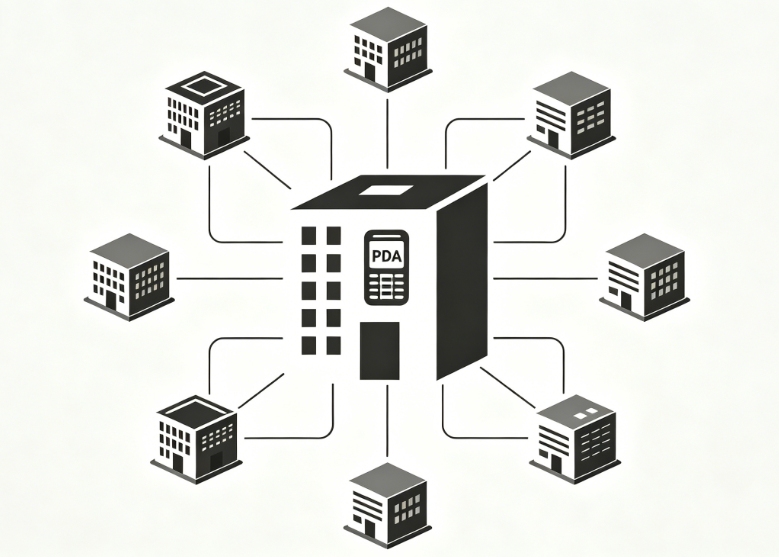
To master multi-location management, a business must transition from reactive counting to proactive asset orchestration. This requires more than just a database; it requires a seamless bridge between the physical asset and the digital record.
The primary reason businesses lose track of equipment across branches isn't a lack of effort; it's the reliance on fragmented data. When Branch A uses a spreadsheet and Branch B uses a local inventory list, the head office is effectively blind.
The Pain Point: Without a centralized IT Asset Tracking Management System, organizations often over-purchase equipment because they don't realize that surplus assets are sitting idle in another location.
Expert Insight: True asset visibility is not just knowing what you have, but knowing its status, location, and custodian in real-time. This is the difference between "Inventory" and "Asset Management."
In the world of IT, "Garbage In, Garbage Out" (GIGO) is a law. A sophisticated Mobile Asset Management Software Solution is only as good as the data entered into it.
If a technician manually types a 12-digit serial number into a system, the error rate is roughly 1 in 300 keystrokes. In a multi-location audit involving 5,000 assets, that’s 16-20 critical data errors.
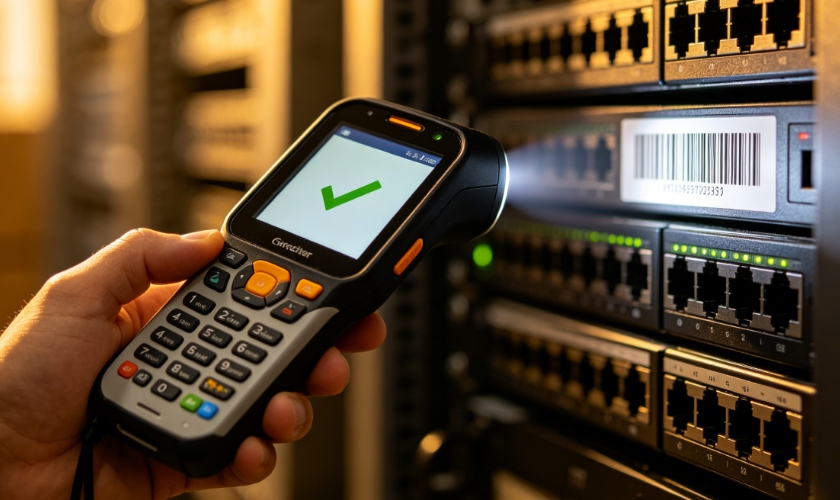
To eliminate human error, the physical-digital bridge must be automated:
By using a Barcode Fixed Asset Tracking System paired with a professional handheld scanner, you ensure that the "Point of Truth" is captured instantly and accurately.
A professional-grade system manages an asset from "Cradle to Grave." As an expert provider, we suggest focusing on these four critical phases of the lifecycle:
Every asset must be tagged at the moment of arrival. For multi-location enterprises, standardizing the tagging protocol is essential. Whether using 2D Barcodes for cost-effectiveness or RFID for high-density audits, the tag is the asset’s "Digital Passport."
The highest risk of asset loss occurs during inter-office transfers. A robust system should require a "Digital Handshake"—the sending branch scans the asset "Out," and the receiving branch scans it "In." This creates a clear chain of custody.
Regular audits are the only way to combat "Ghost Assets." In a multi-location setup, sending an audit team to every site is expensive. A Mobile Asset Management Software Solution allows local managers to perform "Self-Audits" using a PDA, with the results synced instantly to the central cloud.
IT assets contain sensitive data. The system must track the decommissioning process to ensure compliance with data protection laws like GDPR or regional equivalents.
Why should a CFO invest in a high-end tracking solution? The return on investment (ROI) comes from three specific areas:
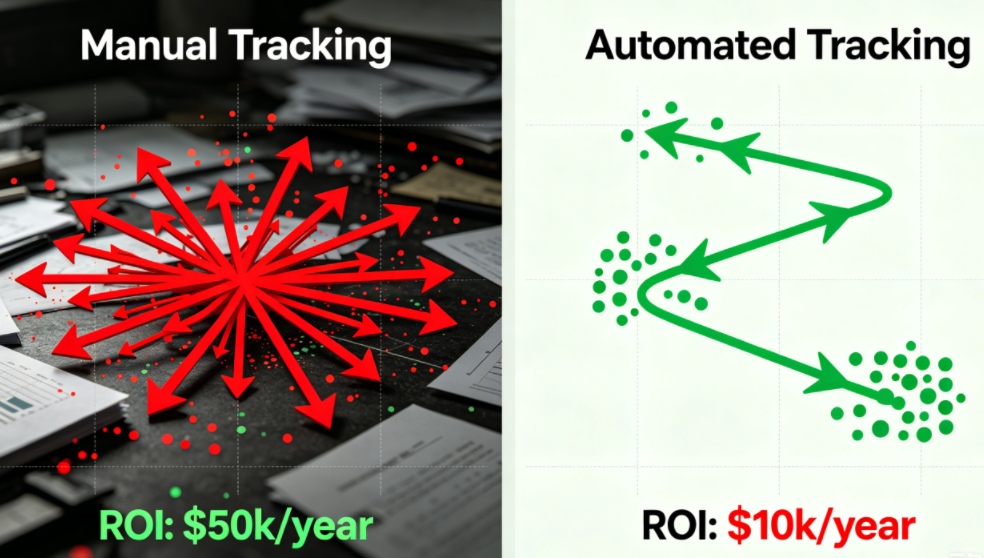
According to Gartner's IT Asset Management Guide, organizations that automate their asset tracking can reduce their hardware spending by up to 15% in the first year.
Managing IT equipment across multiple locations is a complex logistical challenge, but it doesn't have to be a source of chaos. By combining the right Mobile Asset Management Software Solution with rugged, reliable hardware, businesses can turn their IT inventory from a cost center into a strategic asset.
Stop the loss and start the optimization. Explore how our fixed asset management solutions can provide the clarity your organization needs.
Q: Can we use smartphones instead of industrial PDAs for scanning?
A: While possible for small-scale operations, smartphones lack the laser-scanning precision and battery life required for professional audits. Industrial PDAs are built for "Scan-Intensive" environments, ensuring higher speed and lower error rates.
Q: How does a Barcode Fixed Asset Tracking System handle different types of IT equipment?
A: The system is flexible. You can use standard labels for monitors and laptops, and more durable "on-metal" tags for servers or equipment in harsher environments, all managed within the same interface.
Q: Is it difficult to integrate the software with our existing ERP?
A: Most modern IT Asset Tracking Management Systems are designed with API-first architectures, allowing them to push data directly to ERPs like SAP, Oracle, or Microsoft Dynamics for financial reconciliation.

------------------
Hi! Click one of our members below to chat on
 en
en 


 IPv6 network supported