

In the relentless push for faster fulfillment in 2026, the logistics industry has reached a paradoxical crossroads. We have the fastest sorters and the most powerful Cloud ERPs, yet the "Last Meter" of picking remains tethered to a human bottleneck.
For the average worker in an e-commerce hub, the day is defined by a repetitive, exhausting cycle: glance at a PDA screen, memorize a SKU, find a bin, and verify. This constant "Visual Switching" is more than a nuisance; it is a significant drain on e-commerce picking efficiency. At FYJ, we’ve identified that the most critical barrier to productivity isn't physical speed—it's the cognitive load of the "Screen-to-Shelf" gap.

To understand why traditional picking is failing, we must look at the ergonomics of the human eye. Every time a picker moves their gaze from a bright 5.5-inch PDA screen to a dimly lit warehouse shelf, the pupils must dilate and the brain must re-contextualize the data. This "Context Switching" happens thousands of times per shift, leading to a condition known as Digital Eye Strain (DES).
From Search to Instinct
By deploying visual-acoustic warehouse tags, we bridge this gap. Instead of forcing the picker to decode digital data and translate it into a physical location, the shelf becomes an active guide.
When the shelf "speaks" directly to the worker, the cognitive load drops by 40%. The result? A picker who stays energized longer, stays focused deeper, and achieves a level of e-commerce picking efficiency that barcode-only systems simply cannot match.
The biggest challenge for any e-commerce operation is the "Peak Season Surge." During events like Black Friday or Prime Day, warehouse aisles become congested with multiple pickers working in the same zones. In traditional Pick-to-Light systems, this leads to chaos—whose light is flashing?
The "Rainbow Picking" Advantage
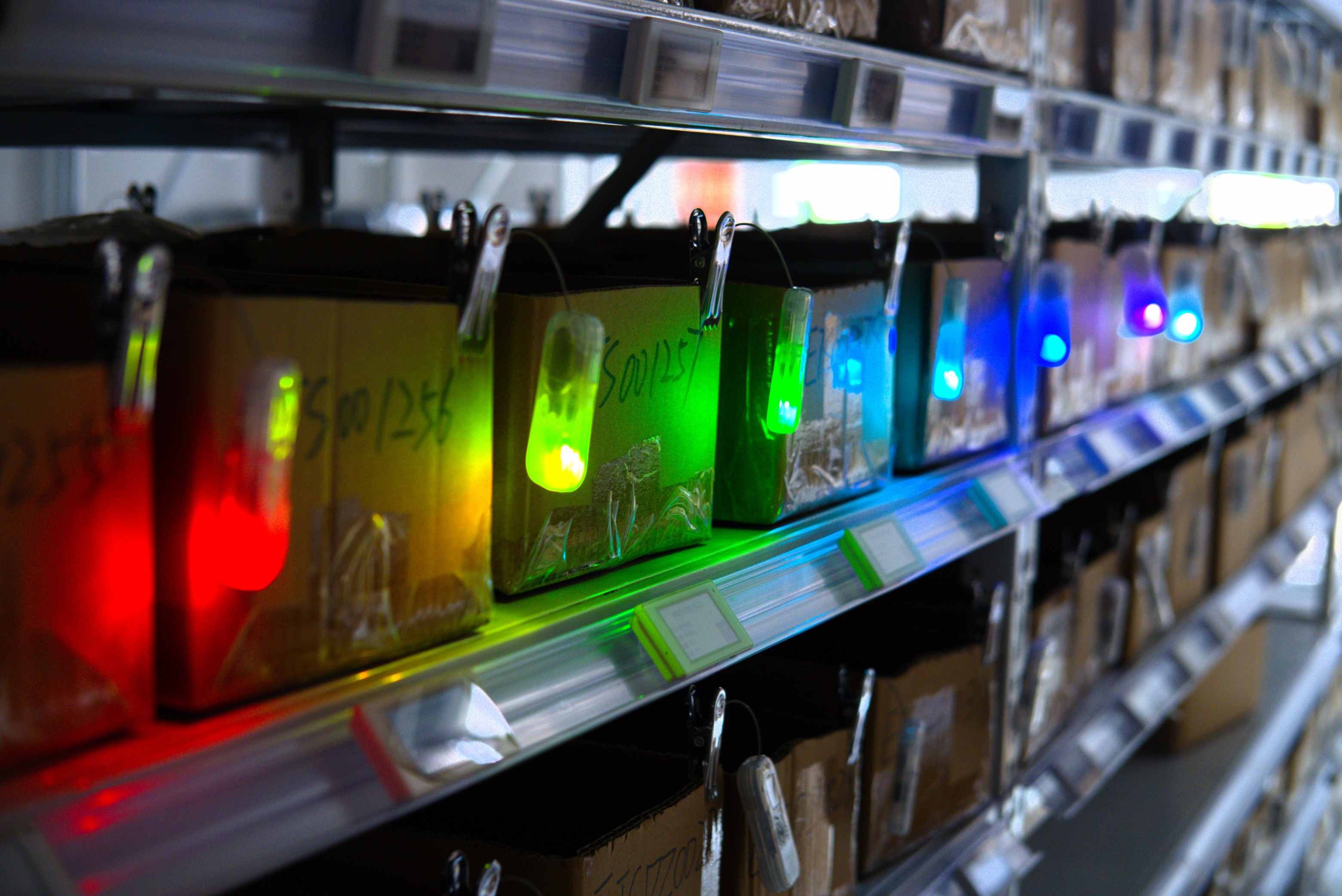
FYJ’s proprietary multi-color LED picking hardware features 7 distinct, high-contrast color profiles (Red, Green, Blue, Yellow, Cyan, Magenta, White). This allows our FYJ WMS solutions to orchestrate multi-user warehouse picking with surgical precision.
Scenario in Action:
By assigning colors to individual identities, the system eliminates instruction confusion. This doesn't just increase speed; it creates a stress-free environment where 7 people can work as efficiently as one, even in high-density corridors.
In the B2B world where FYJ operates, a mis-pick is a broken contract. The cost of reverse logistics (shipping back the wrong item, re-shipping the correct one, and processing the return) can range from $25 to $75 per error. For a high-volume warehouse, a 1% error rate can translate to millions in lost profit.
To reduce picking errors, we rely on the principle of "Redundant Verification." Barcode scanning is a reactive check; it tells you that you were right or wrong after you’ve made the move. Visual-acoustic warehouse tags are a proactive guide. They prevent the hand from reaching for the wrong bin in the first place. By engaging the worker's peripheral vision and auditory senses, the "Perfect Order Rate" naturally gravitates toward 99.9%.
4. Measuring the Strategic Pick-to-Light ROI
For a CTO or Warehouse Owner, the question is always: "When do I see the return?" The pick-to-light ROI with FYJ WMS solutions is multidimensional:
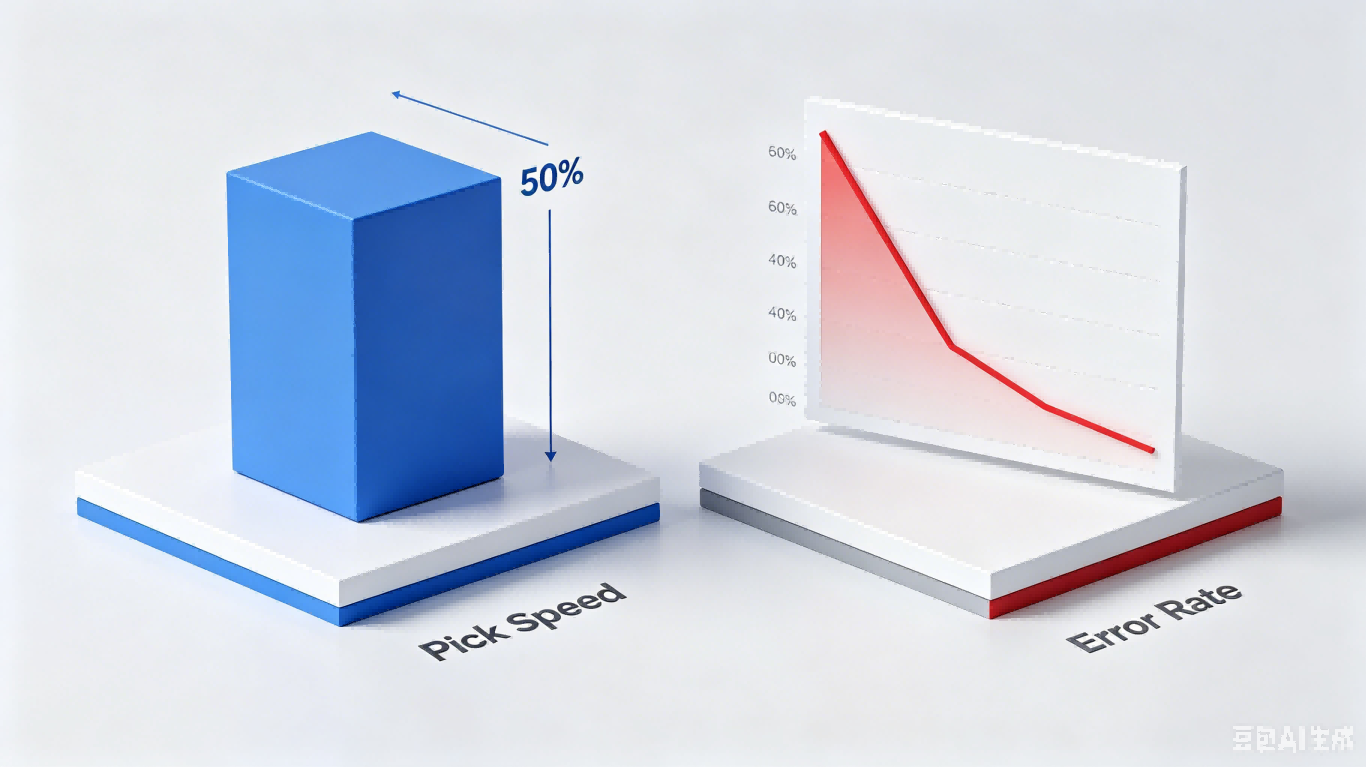
By removing the "Searching" phase (which accounts for up to 50% of the picking cycle), businesses typically see a 30-50% increase in Picks-Per-Hour (PPH).
In labor markets like Latin America or Africa, where high turnover is a reality, training costs are a major drain. Our visual system is "language-agnostic" and "skill-agnostic." A new hire can be 100% productive in under an hour by simply "following their color."
Reducing eye fatigue and cognitive stress isn't just a productivity play—it’s an ESG (Environmental, Social, and Governance) strategy. A healthier, less-exhausted workforce stays longer, significantly reducing the massive costs associated with recruitment and onboarding.
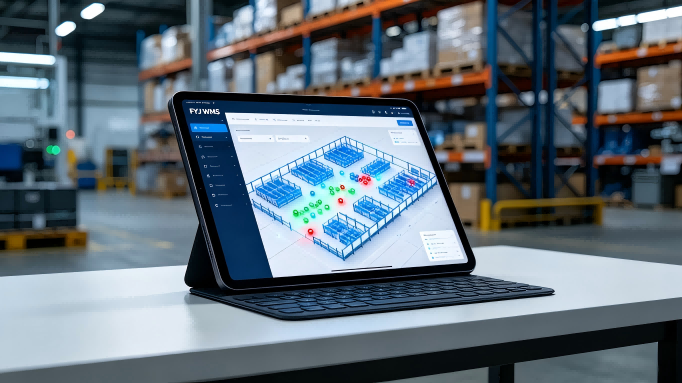
As a solution provider with a "Factory Persona," FYJ doesn't just offer software; we offer industrial-grade resilience. Our FYJ WMS solutions are built on a low-latency IoT framework:
The future of e-commerce picking efficiency belongs to those who respect the "Human Factor." By eliminating the visual switching cost and embracing multi-user warehouse picking, we aren't just automating—we are empowering. FYJ is proud to be at the forefront of this revolution, providing the hardware and software that turns logistics challenges into competitive advantages.
Q: How do these tags specifically help reduce picking errors?
A: Unlike PDA screens that require constant refocusing, the lights provide "Preattentive Processing"—the brain recognizes the light before it even thinks. This "Heads-Up" picking reduces the chance of reaching for the wrong shelf by nearly 100%.
Q: What is the typical pick-to-light ROI period for a mid-sized warehouse?
A: Most clients see a full payback within 8 to 14 months, depending on order volume and local labor costs. The primary drivers are increased PPH and the elimination of return shipping costs.
Q: Can I integrate these visual-acoustic warehouse tags with my existing ERP?
A: Absolutely. Our FYJ WMS solutions are designed with an Open API/SDK, making them highly compatible with legacy systems and modern cloud ERPs alike.
MHI Annual Industry Report: Deep insights into IoT and supply chain trends.
Statista: Global E-commerce Logistics Data: Market growth projections for 2026.
ISO 27001 Data Standards: How we protect your warehouse data.
FYJ Product Catalog: Industrial PDA Series: The hardware core of our solutions.

------------------
Hi! Click one of our members below to chat on
 en
en 


 IPv6 network supported