

Emergency supply warehouses need speed, accuracy, and traceability. When an emergency occurs, materials must be dispatched quickly, inventory data must remain accurate, and every movement should be recorded.
However, many emergency reserve warehouses still face problems such as scattered inventory data, disconnected systems, outdated equipment, manual inbound and outbound records, and limited real-time visibility.
FYJ provides an RFID Emergency Supply Warehouse Management Solution that combines RFID software and hardware to support automated inbound and outbound operations, real-time inventory visibility, and full-process material traceability.
FYJ has accumulated more than 1,000 project cases in administrative organizations, government institutions, logistics support organizations, emergency management, and related fields.
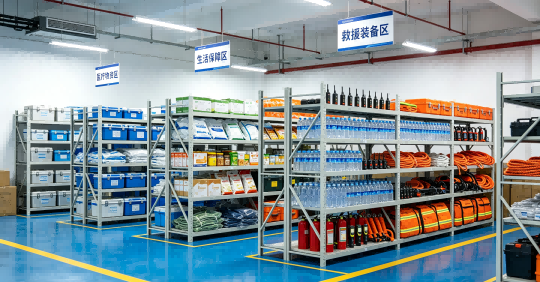
Emergency supply warehouses are different from ordinary commercial warehouses. Their management requirements are more demanding in several areas.
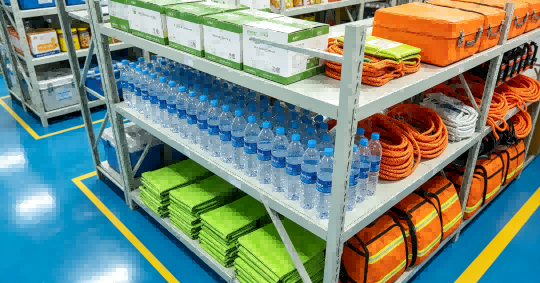
Emergency supplies need to be dispatched quickly after an emergency instruction is issued.
Warehouse operations must respond immediately to support fast outbound processing.
Emergency reserves may include thousands of SKUs covering daily necessities, medical supplies, rescue equipment, and other materials.
Different batches and expiration dates make inventory management more difficult.
Food, medicine, and other time-sensitive materials require expiration-date control.
The system supports alerts for materials approaching expiration and prevents expired materials from being issued.
For organizations with multiple reserve warehouses, inventory data needs to be synchronized across locations to support cross-regional material transfers.
Temporary warehouses and field environments may not always have stable network access.
The system supports offline operation so warehouse activities can continue when the network is unavailable.
Emergency materials require clear records of every movement.
The system supports data encryption, permission-based access, and full operation records for traceability and audit purposes.
The FYJ solution uses a three-layer architecture covering data collection, management applications, and system access.
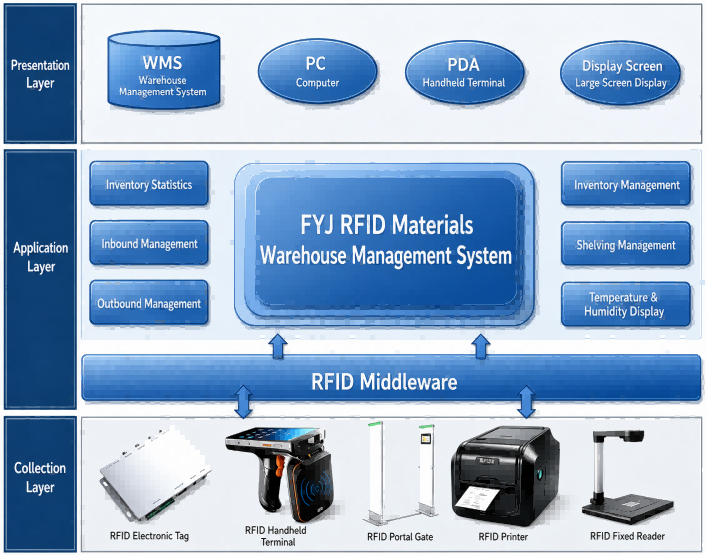
The data collection layer includes:
These devices collect material information during warehouse operations.
When the network is unavailable, data can be stored locally and later transferred to the system through offline methods.
The system supports:
Warehouse personnel can log in to the FYJ RFID management system through:
This allows users to view warehouse and inventory data through different terminals.
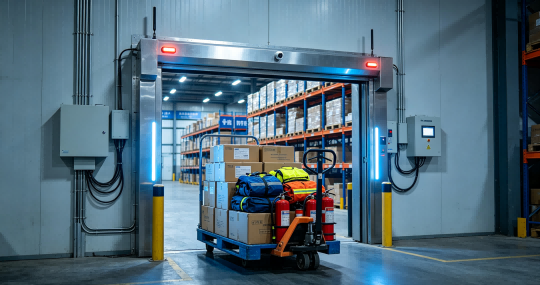
RFID integrated readers or RFID portal gates can be deployed at warehouse entrances and exits.
When RFID-tagged materials pass through, the system automatically reads multiple tags and records the information in the management system.
There is no need to scan each item individually or record each transaction manually.
The solution works with the FYJ F9850U RFID handheld computer.
Warehouse personnel can walk along the shelves with the handheld device, which automatically reads nearby RFID tags and generates inventory results in real time.
Inventory counting efficiency can be improved by 97%, while inventory accuracy can reach 99.8%.

Management personnel can view warehouse data through computers and data dashboards.
Available information includes:
The system also supports reports by material category, region, and time.
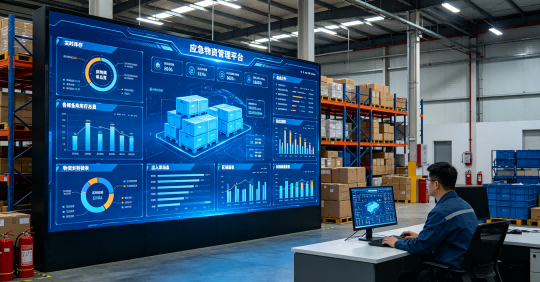
Each emergency material is recorded from the time it is assigned an identification code during inbound processing.
All subsequent operations until outbound are also recorded automatically in the system.
This allows material movements to be traced throughout the management process.

The system can integrate temperature and humidity sensors.
Temperature and humidity data can be synchronized with the management system and displayed on data dashboards.
When temperature or humidity exceeds the configured range, the system notifies warehouse management personnel.
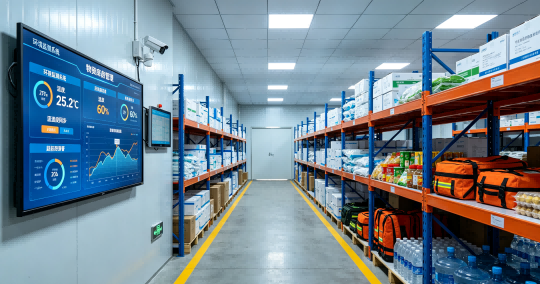
The following projects show how the FYJ RFID emergency supply management solution has been applied in different emergency reserve environments.
The organization manages multiple subordinate teams.
Its main challenges included:
The organization implemented the FYJ RFID Automated Inbound and Outbound Management Solution.
After implementation:
The warehouse managed a wide range of materials with multiple batches.
Its main challenges included:
The organization implemented the FYJ RFID Automated Inbound and Outbound Management Solution.
After implementation:
The warehouse handled frequent material borrowing and returns.
Its main challenges included:
The warehouse implemented the FYJ RFID Automated Inbound and Outbound Management Solution.
After implementation:
The FYJ RFID Emergency Supply Warehouse Management Solution supports automated inbound and outbound operations, bulk inventory counting, real-time inventory visibility, material traceability, offline operation, and environmental monitoring.
By combining RFID tags, handheld devices, fixed readers, RFID printers, portal gates, and management software, emergency reserve warehouses can move from manual recording and individual scanning toward more automated material management.
For emergency management departments and reserve warehouses, this helps ensure that materials can be dispatched quickly, remain available when needed, and stay traceable throughout the process.
What is an RFID emergency supply management system?
It is a management solution that combines RFID tags, RFID readers, handheld devices, printers, portal gates, and software to manage emergency reserve materials.
How does RFID automate inbound and outbound operations?
RFID readers or portal gates are installed at warehouse entrances and exits. When RFID-tagged materials pass through, the system reads multiple tags automatically and records the corresponding information.
Can RFID be used for bulk inventory counting?
Yes. The FYJ F9850U RFID handheld computer can read multiple RFID tags while warehouse personnel walk along the shelves.
Can the system work offline?
Yes. The solution supports local data storage and offline operation when network access is unavailable.
Can the system manage expiration dates?
Yes. The system supports batch and expiration-date management, including alerts for materials approaching expiration.
Can temperature and humidity be monitored?
Yes. Temperature and humidity sensors can be integrated with the system, and the data can be displayed on the management platform and data dashboard.
Hi! Click one of our members below to chat on
 en
en 


 IPv6 network supported