banner

Blog

Home

Blog

  • PDA mobile terminal, make the manufacturing industry management more efficient
    PDA mobile terminal, make the manufacturing industry management more efficient
    Apr 26, 2021
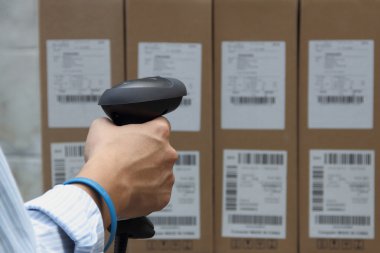
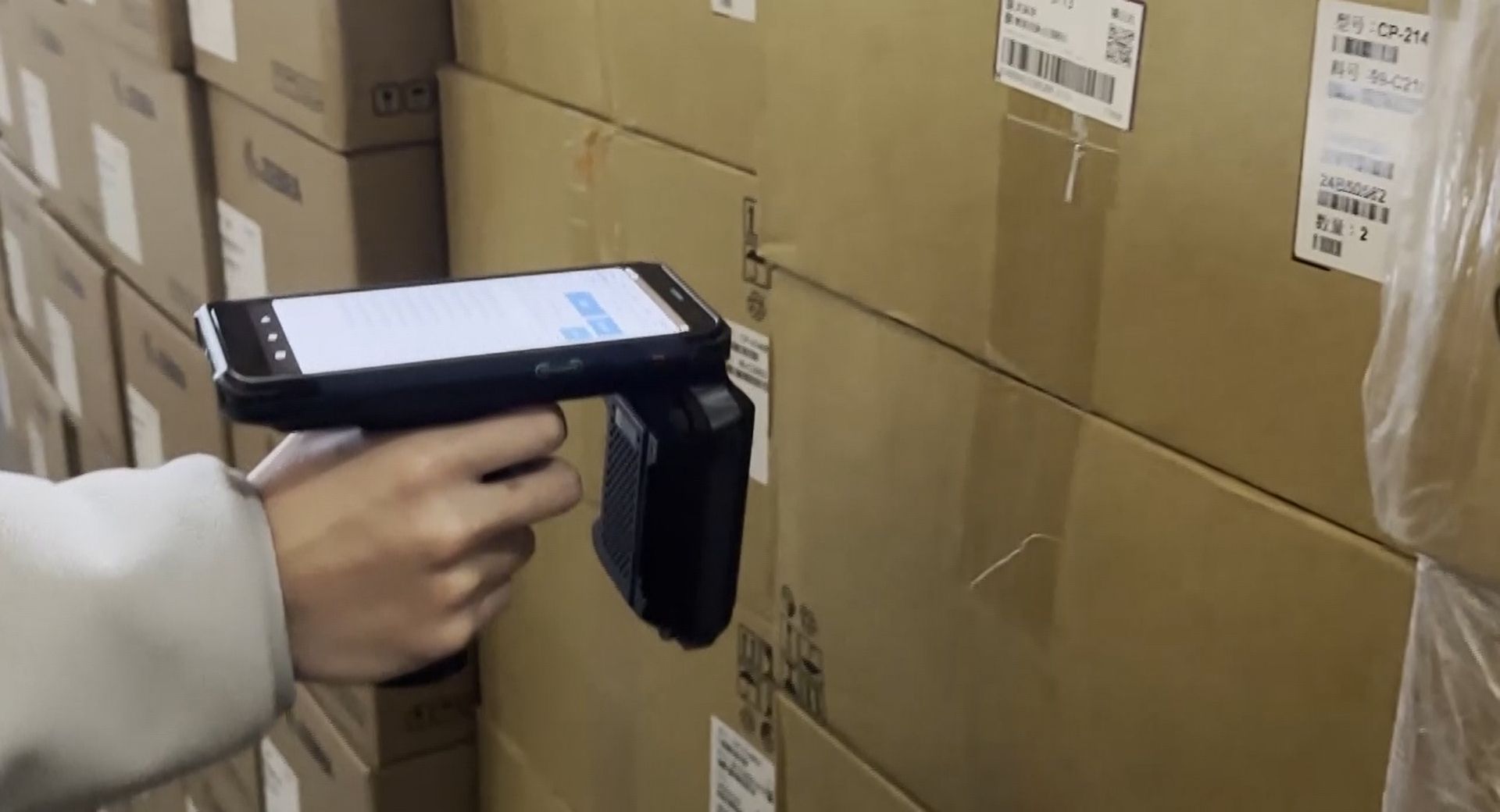
    As production information management systems (like MES and ERP) continue to evolve, manufacturing workshops increasingly require real-time data visibility through frequent information interaction. However, traditional paper-based work reports and manual tracking suffer from a lack of flexibility, delayed updates, and high error rates, leading to severe data bottlenecks. To break down these silos, the introduction of a Rugged Mobile Computer For Manufacturing has become an absolute necessity, making operational management faster, more accurate, and highly efficient. What Exactly is a PDA Mobile Terminal? PDA stands for Personal Digital Assistant. While consumer PDAs (like smartphones and tablets) help us with daily communication and entertainment, the manufacturing floor requires something much tougher. An Industrial Handheld Barcode Scanner Terminal is purpose-built for the industrial field. It integrates professional hardware such as robust 1D/2D barcode scanners, RFID readers, and rugged housings designed to withstand drops, dust, and water. Industrial Mobile Computer Waterproof Scanner 4G Android Scanner Warehouse Scanner Tool Convenient Functions of PDA Applications in Manufacturing By equipping your workforce with a Rugged Android PDA Mobile Terminal, you instantly upgrade your facility's operational capabilities across several critical areas: #01 Dynamic Material Transit: Shifts material processing from fixed locations to "anytime, anywhere" receiving. This reduces unnecessary material movement, improves site utilization, and accelerates the manufacturing flow. #02 Error-Proofing (Anti-Wrong Material): Real-time monitoring during production provides instant alerts, ensuring that no defective or mixed materials slip through the cracks on the assembly line. #03 Quality Audit & Reporting: Quality inspection results can be logged instantly. Devices support live photo uploads, providing intuitive feedback on defects for immediate correction. #04 Equipment Inspection: Allows technicians to execute daily inspections of machine parameters via barcode scans, ensuring all manufacturing equipment operates normally without unexpected downtime. The Four Core Modules of PDA Terminals Production Management Enables intelligent warehousing functions, real-time confirmation of production tasks, and mobile receiving/sending. This drastically reduces the cost of material movement across the floor. Quality Management Maintains real-time control of the production process. Supervisors can easily adapt to different audit needs, upload photos of environmental factors or operational errors, and implement rapid corrections. Equipment Management Equipment ledgers are electronically archived and standardized. Daily inspection and maintenance records are updated instantly via on-site code scanning, facilitating complete traceability. Reporting Management Provides precise visualization of work reports. Managers can monitor the status of materials at any time and effectively oversee production progress and staff efficiency. The capabilities of PDA mobile terminals go far beyond these examples. Once integrated, the potential for optimization is limitless. Whatever operational bottleneck you can think of, a rugged PDA terminal has the power to solve it. - end -
    Read More
  • Enterprise inventory management system to choose the appropriate use, to enhance their economic efficiency
    Enterprise inventory management system to choose the appropriate use, to enhance their economic efficiency
    Dec 08, 2020
    In the modern B2B industrial landscape, the difference between a thriving enterprise and a struggling one often lies in the precision of its warehouse operations. An Real Time Inventory Management System Software is no longer a luxury—it is the digital backbone of any organization that handles physical goods. Based on sophisticated information technology, these systems serve as a centralized hub for tracking stock levels, processing outbound orders, and managing inbound procurement. By integrating sales data with financial accounting, businesses can achieve a level of synchronization that was previously impossible, transforming the warehouse from a cost center into a strategic asset. The ability to query stock status instantly and generate automated statistical reports allows management to make data-driven decisions that directly enhance economic efficiency and market responsiveness. Survival Of The Fittest: Overcoming Manual Warehouse Chaos The "survival of the fittest" principle applies perfectly to supply chain management. Companies that cling to manual processes—relying on paper ledgers or fragmented spreadsheets—frequently face critical issues that erode customer trust. One of the most common pitfalls is the lack of clarity regarding issued versus unissued stock. When inventory data is disconnected from the sales floor, customers are often promised items that are actually out of stock, leading to cancelled orders and lost long-term relationships. Furthermore, inventory confusion leads to constant order modifications and inaccurate stock counts. Without a Online Asset Management Software System, employees are forced to engage in "double-checking" or repetitive manual verifications. This not only wastes hundreds of man-hours every month for logistics and warehouse personnel but also spikes labor costs and creates a culture of frustration. To survive in today’s competitive market, enterprises must identify their specific inventory pain points and select a system that automates the mundane, allowing human talent to focus on growth rather than error correction. Digitization: The Path To Real-Time Data Visibility True digitization goes beyond simply putting data on a screen; it’s about the seamless flow of information across the entire commodity circulation cycle. A modern inventory management system updates real-time data at every touchpoint—from the moment a pallet arrives at the receiving dock to the final dispatch of a customer package. By automatically generating comprehensive reports covering inbound, outbound, and sales metrics, the system provides a "single version of the truth" for the entire organization. This level of visibility enables the formulation of reasonable procurement plans. Instead of guessing based on gut feeling, procurement managers can use historical data to avoid the dual phenomena of overstocking (which ties up capital) and stockouts (which loses sales). Realizing this digital transformation is the first step toward achieving "lean" operations, where every square foot of warehouse space and every dollar of capital is utilized to its maximum potential. Strategic Advantage: Improving Market Competitiveness The ultimate goal of any technological upgrade is the improvement of market competitiveness. An integrated inventory management system serves as the core of the enterprise's business objectives, unifying manufacturing resources, sales plans, and production schedules under one umbrella. When production, procurement, and finance are fully integrated, the "Logistics, Information Flow, and Capital Flow" are synchronized in real-time. This synchronization allows for rapid, accurate decision-making that can pivot the company according to changing market demands. To truly bridge the gap between the physical warehouse and the digital system, many enterprises are now adopting the Handheld Android PDA For Inventory Control. These rugged mobile terminals allow workers to scan barcodes or RFID tags directly at the source, ensuring that the central database is updated the very second a move occurs. This synergy between high-performance hardware and intelligent software ensures that the information the CEO sees in the boardroom perfectly matches the reality on the warehouse floor. By reducing errors and accelerating fulfillment times, the enterprise doesn't just manage inventory better—it builds a reputation for reliability that competitors cannot match. - END -
    Read More
  • The trend | The importance of enterprises with inventory management system to do anti-counterfeiting traceability
    The trend | The importance of enterprises with inventory management system to do anti-counterfeiting traceability
    Oct 27, 2020
    Traceability is the current development trend Currently there are many enterprises will use the inventory management system to do anti-counterfeiting traceability In terms of its importance and necessity Consumers are the key link   Principle of Anti-counterfeiting and Traceability   Enterprises need to enter in the background, after anti-counterfeiting, product information into the product quality traceability system, such as origin, production batch, production date, basic product information and the city to be sent to. The labels have been entered into the product quality traceability system by scanning gun and eventually the enterprise can sell them from the warehouse. When consumers scan the anti-counterfeiting labels, they can see the basic information of the products previously entered by the enterprise in order to buy with confidence.   (retail store barcode reader)   Enterprises use the inventory management system to do anti-counterfeiting traceability, the most direct point is the quality of the product, to promote quality products and services to consumers, the establishment of product quality traceability system.   Role for business   What do consumers care about most? Of course, after receiving the product, you can scan your phone to learn about the product and find out as much information as possible.     For example, agricultural products: which province, city, county or village is the place of origin, whether it has non-polluting, organic and green certifications, whether it has a quality inspection report, a specific ripening cycle, how many types of pesticides have been used what fertilizers have been applied, what has been done by the company, and so on.   (Use Android 14 Industrial Handheld Terminal)   QR codes for product traceability can inform consumers of these results. In addition to letting consumers know about the products they are purchasing, they can also let them know that they are counterfeits. They have more confidence in the product and a better impression of the brand.   Six values of anti-counterfeiting and traceability   Anti-fake Search Support QR code anti-counterfeiting method, consumers' cell phones scan the QR code of the product package in order to display the authenticity query result. Anti-flagging Anti-evasion management is possible. The back-office system can clearly understand the cargo information, locate the terminal and control the enterprise. Information management Realize basic product batch management, product warehousing management, multifunctional functions of a system. QR code marketing Create a holistic shopping center and support interactive features such as cash bonuses, carousels and coupon issuance, thus making marketing more flexible. Big data analytics Create a consumer database by purchasing and scanning code behavior, and conduct targeted marketing by analyzing consumer behavior and market conditions.   Enterprises use inventory management system for traceability and anti-counterfeiting It is the trend and consumer demand at the same time the market and enterprises are not limited to this single aspect of this demand.       - end -
    Read More
  • There are various inventory management system software on the market. How to avoid the minefields when purchasing?
    There are various inventory management system software on the market. How to avoid the minefields when purchasing?
    Aug 30, 2020
    There are countless types of inventory management system software on the market. For first-time buyers, deciding which one to implement can feel overwhelming. Don’t let choice paralysis slow down your operations. Here is FYJ Technology's ultimate guide to avoiding costly mistakes when upgrading your warehouse technology. 1. Choose the Solution That Solves Your Specific Problem When evaluating a system, the most important factor isn't the flashy interface, the sheer volume of features, or even the lowest price tag. First and foremost, you must identify your operational bottlenecks. For example, does a food and beverage distributor need the same granular fabric-sizing metrics as an apparel retailer? Of course not. Even if a piece of Warehouse Management Software offers exhaustive data fields, it’s useless if it doesn't fit your daily workflow. For food logistics, accurate shelf-life tracking and expiration warnings deployed straight to an associate's Industrial Mobile Computer are far more critical. Think about the problems you encounter daily: unclear stock levels, tedious manual counting, or misplaced assets. Identify these pain points, and then find the Equipment Tracking Software and hardware combo that directly resolves them. 2. Look at the Maturity of the System and Hardware Ecosystem There is a lot of cheap—or even free—invoicing and inventory software available. While free isn't inherently bad, you must evaluate the maturity of the entire ecosystem. This maturity is measured by time to market, post-sales support response times, and R&D strength. Furthermore, your software needs to communicate flawlessly with your hardware. If you deploy a top-tier Enterprise Asset Management System, you need it to integrate seamlessly with the Rugged Handheld Computers or PDA scanners your frontline workers rely on. A mature provider ensures software and hardware compatibility out of the box. 3. Cost-Effectiveness is King (TCO Analysis) For small and medium-sized businesses, cost-effectiveness cannot be ignored. However, cost-effective does not just mean "cheap." A solution might look great on paper, but if it requires you to constantly replace fragile consumer devices, your Total Cost of Ownership (TCO) will skyrocket. True cost-effectiveness comes from deploying the right Warehouse Inventory Software alongside durable handheld mobile computers that won't break when dropped on a concrete floor. Only solutions that balance robust features with industrial-grade durability offer genuine value for your business. There is no absolute "best" or "worst" system. There is only what is suitable or unsuitable for your specific operations. We hope this guide helps you navigate your next technology upgrade with confidence.
    Read More
1 2 3 4 5 6
A total of6pages

leave a message

leave a message
Tell us about the product you are interested in, our team will reply to you within 2 hours with tailored resources like industry white papers, price quotes, or free trial access.
submit

home

products

WhatsApp

contact

Need Help? Chat with us

Start a Conversation

Hi! Click one of our members below to chat on