On-Premise to Cloud: Why SaaS is the Future of Fixed Asset Management in 2026
Apr 30, 2026
Introduction
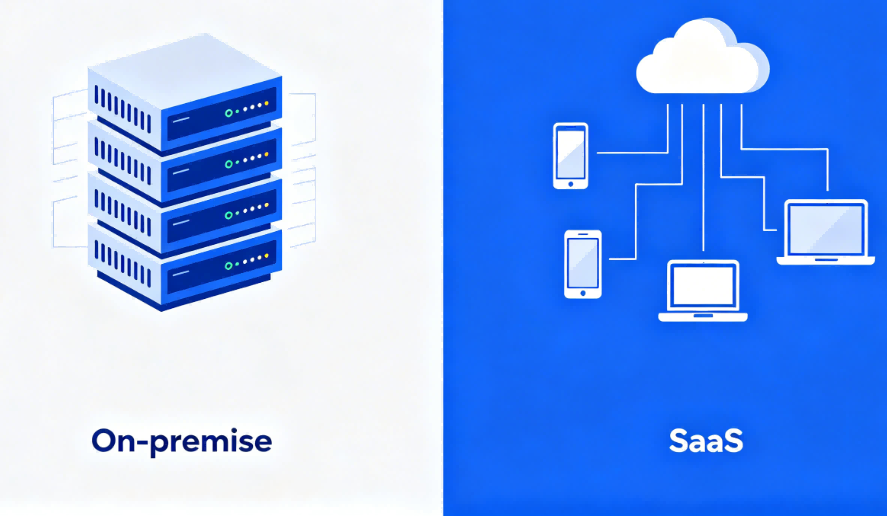
For decades, Fixed Asset Management (FAM) was tethered to local servers, managed via clunky on-premise installations or risk-prone spreadsheets. However, the tide has turned. As digital transformation accelerates, Forbes reports that the shift from on-premise to SaaS (Software as a Service) has become a strategic imperative for enterprises seeking agility and resilience. But why is the cloud winning? Let’s explore how SaaS is redefining how businesses track, manage, and optimize their physical assets.
1. Rapid Deployment: From Months to Minutes
Traditional on-premise systems require hardware procurement, server setup, and manual installation—a process that can take months. According to Gartner’s latest cloud forecast, the speed of public cloud adoption is driven by the need for immediate operational capacity.
Instant Access: Organizations can initialize their database and start tagging assets almost immediately.
Scalability: The cloud scales with your growth without needing a hardware upgrade, a feature critical for global expansion.
2. Automatic Updates and Compliance
One of the biggest pain points of on-premise software is version obsolescence. In the financial sector, staying current with accounting regulations is non-negotiable. SaaS models provide Continuous Delivery, ensuring your system always complies with evolving standards such as IFRS 16 Leases and ASC 842. Users receive the latest security patches and features automatically, eliminating the need for costly manual IT migrations.
3. Real-Time Global Collaboration
In a post-pandemic world, business happens everywhere. On-premise systems often create "data silos" limited to the local office network. SaaS breaks these barriers:
Cross-Regional Access: A CFO in London can review asset depreciation reports from a factory in Singapore in real-time.
Mobile Computer Integration: Using mobile computer apps to scan QR codes or RFID tags ensures data is synced instantly. This connectivity is the backbone of modern Enterprise Asset Management (EAM) as defined by industry leaders like IBM.
4. Strategic Cost Shift: CAPEX to OPEX
The transition to SaaS fundamentally changes the financial structure of IT investments. It shifts costs from CAPEX (Capital Expenditure) to OPEX (Operating Expenditure). By removing the burden of maintaining physical servers, cooling, and specialized on-site IT staff, businesses can redirect capital toward core revenue-generating activities.
5. Enhanced Data Security and Disaster Recovery
Contrary to old myths, the cloud is often more secure than local servers. Data from the Cloud Security Alliance (CSA) suggests that top-tier SaaS providers offer security protocols and encryption levels that most individual enterprises cannot afford to maintain on their own. With automated redundant backups, your asset data remains safe and recoverable even in the event of a local hardware failure.
Conclusion
The migration from on-premise to SaaS is no longer just a trend—it is a baseline for competitive operation in 2025. By embracing a cloud-first approach, companies gain the transparency and scalability needed to turn their fixed assets into a strategic advantage.
Is your business ready for the cloud? Contact us today for a demo of our SaaS Fixed Asset Solution.
Explore the future of immutable asset tracking:
Official Website: www.fyjaidc.com
Industry References & Standards:
SaaS Industry Trends: Forbes
Cloud Computing Market Forecast:Gartner
IFRS 16 Leases Official Standard:IFRS Foundation
ASC 842 Leases Official Standard:FASB
Enterprise Asset Management (EAM) Definition:IBM
CAPEX vs. OPEX: Key Differences:Investopedia
The State of Cloud Security:Cloud Security Alliance
Frequently Asked Questions (FAQ)
Q1: What is the main difference between on-premise and SaaS fixed asset management?
A: On-premise software is installed locally on your company's servers and requires manual maintenance. SaaS (Software as a Service) is hosted in the cloud, offering automatic updates, remote access via mobile devices, and a subscription-based pricing model instead of large upfront costs.
Q2: Is my asset data secure in a SaaS system?
A: Yes. Reputable SaaS providers use enterprise-grade encryption and host data in tier-1 data centers (like AWS or Azure) that often have higher security standards than local business servers. They also provide automated backups to prevent data loss.
Q3: How long does it take to migrate from an old system to the cloud?
A: While on-premise setups can take months, a SaaS transition can be completed in weeks. The process typically involves cleaning your existing data, importing it via bulk upload tools, and configuring user permissions.
Q4: Can SaaS asset software help with IFRS 16 or ASC 842 compliance?
A: Absolutely. Modern SaaS platforms are designed to handle complex lease accounting. They automatically calculate depreciation and Right-of-Use (ROU) assets, ensuring your financial reports always meet the latest international standards.
Q5: Will I still have access to my data if the internet goes down?
A: Most SaaS asset tools offer mobile apps with offline modes. You can perform audits or update asset statuses without a connection; the data will automatically sync to the cloud once you are back online.
Read More


 en
en 


 IPv6 network supported