

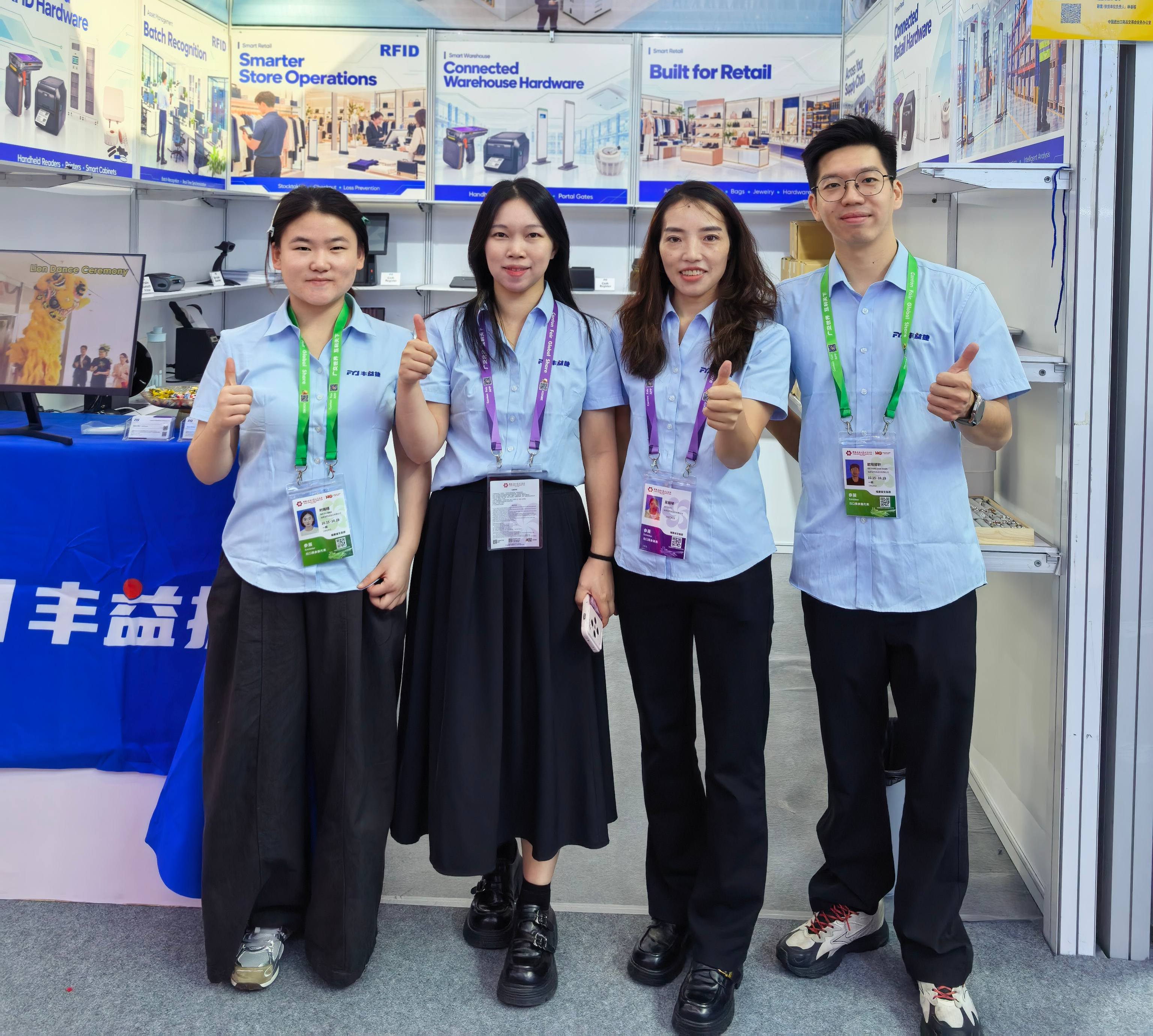
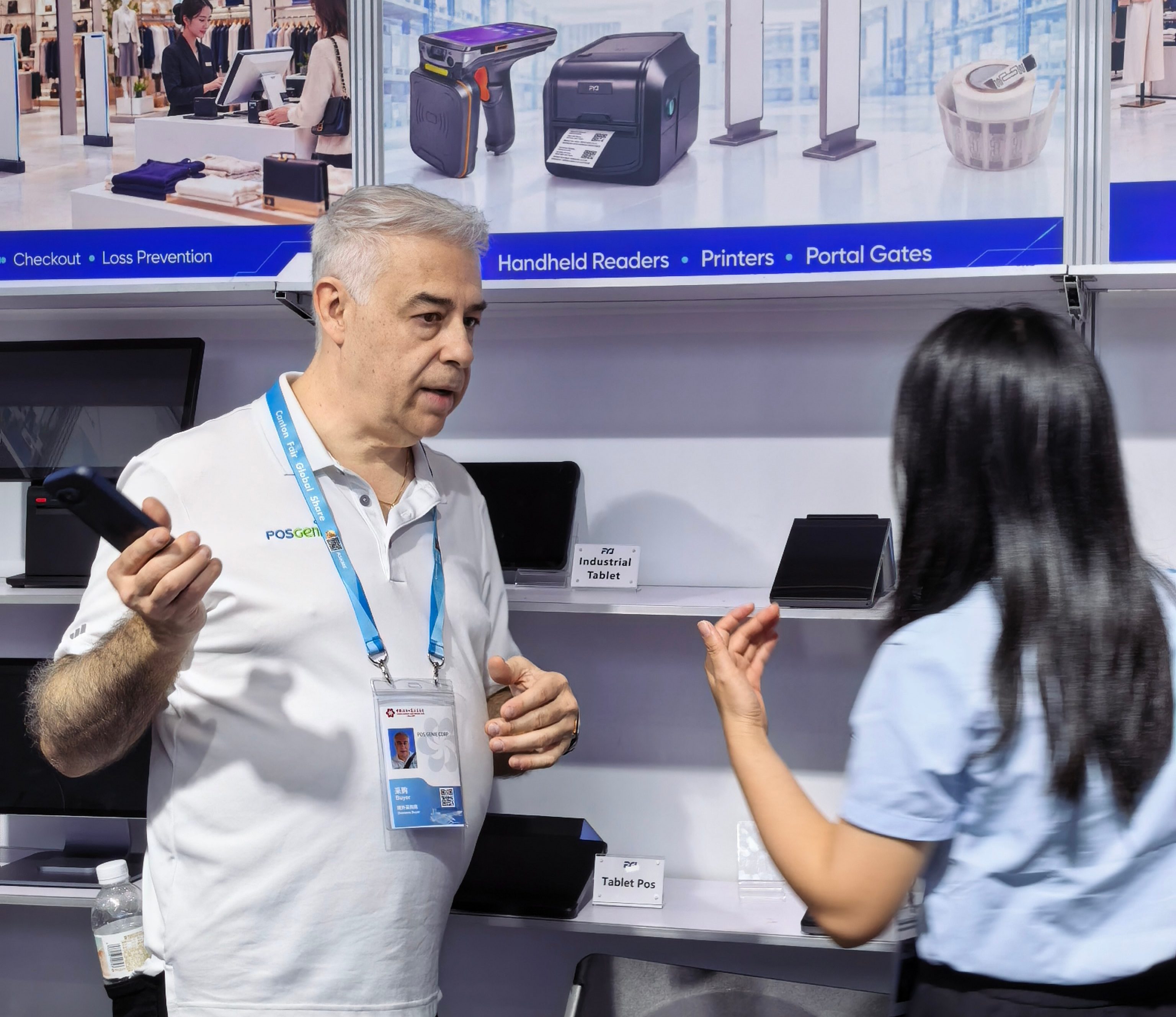
From October 15–19, 2026, Guangzhou Fengyijie Electronic Technology Co., Ltd. (FYJ) participated in Phase 1 of the 140th Canton Fair in Guangzhou.
At Hall 18.2, Booth J21, visitors did more than browse products. They picked up RFID handheld readers, tested batch tag reading, watched RFID labels being printed, explored retail checkout equipment, and discussed how RFID could fit into their own warehouse, retail and asset management workflows.
Over five busy days, these demonstrations led to practical conversations about inventory counting, automated inbound and outbound records, RFID gates, tag selection, existing software and system integration.
Some of those discussions continued beyond the exhibition hall, with visitors coming to FYJ’s Guangzhou office to review their projects in greater detail.
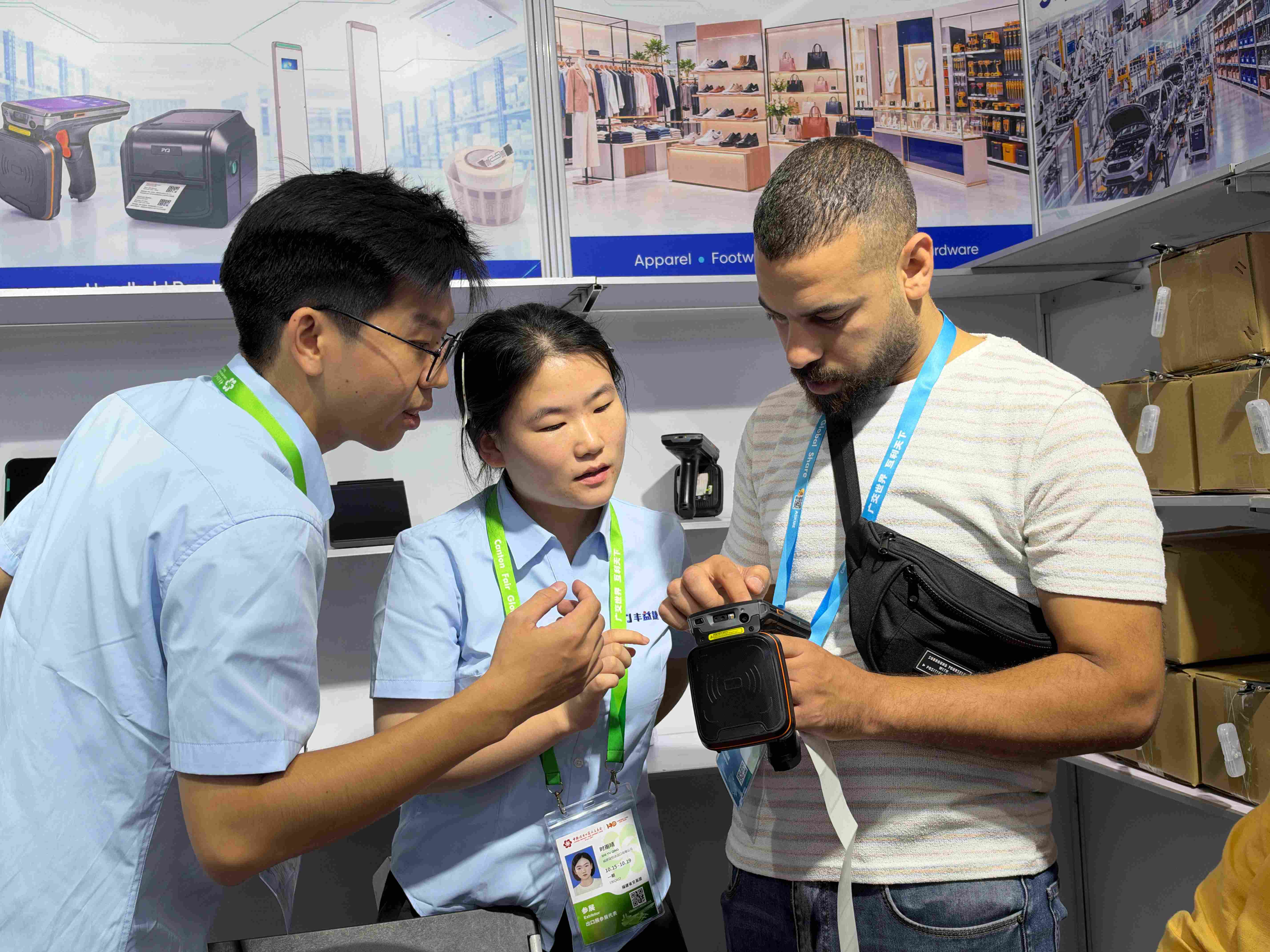
At the FYJ booth, visitors picked up RFID handheld PDAs and tried the reading functions themselves.
They tested multiple tags in a single scanning session, explored longer-distance reading, and identified tagged items inside packaging boxes without opening them.
With results displayed directly on the handheld screen, visitors could immediately see what the device was reading and consider how the same process might apply to their own inventory checks, receiving or goods verification.
These hands-on tests also made it easier to discuss factors that can affect RFID performance, including tag selection, product material, packaging and the operating environment.
Some visitors arrived with very specific application questions. One company currently managing metal sheet products with QR codes wanted to explore RFID because warehouse staff still needed to walk through the site to check inventory manually. Another customer needed to know whether RFID tags could withstand a process involving freezing and a return to room temperature. 粘贴的 Markdown (1)
These kinds of requirements are difficult to evaluate from product specifications alone, which is why testing with actual products and operating conditions can be an important part of project planning.
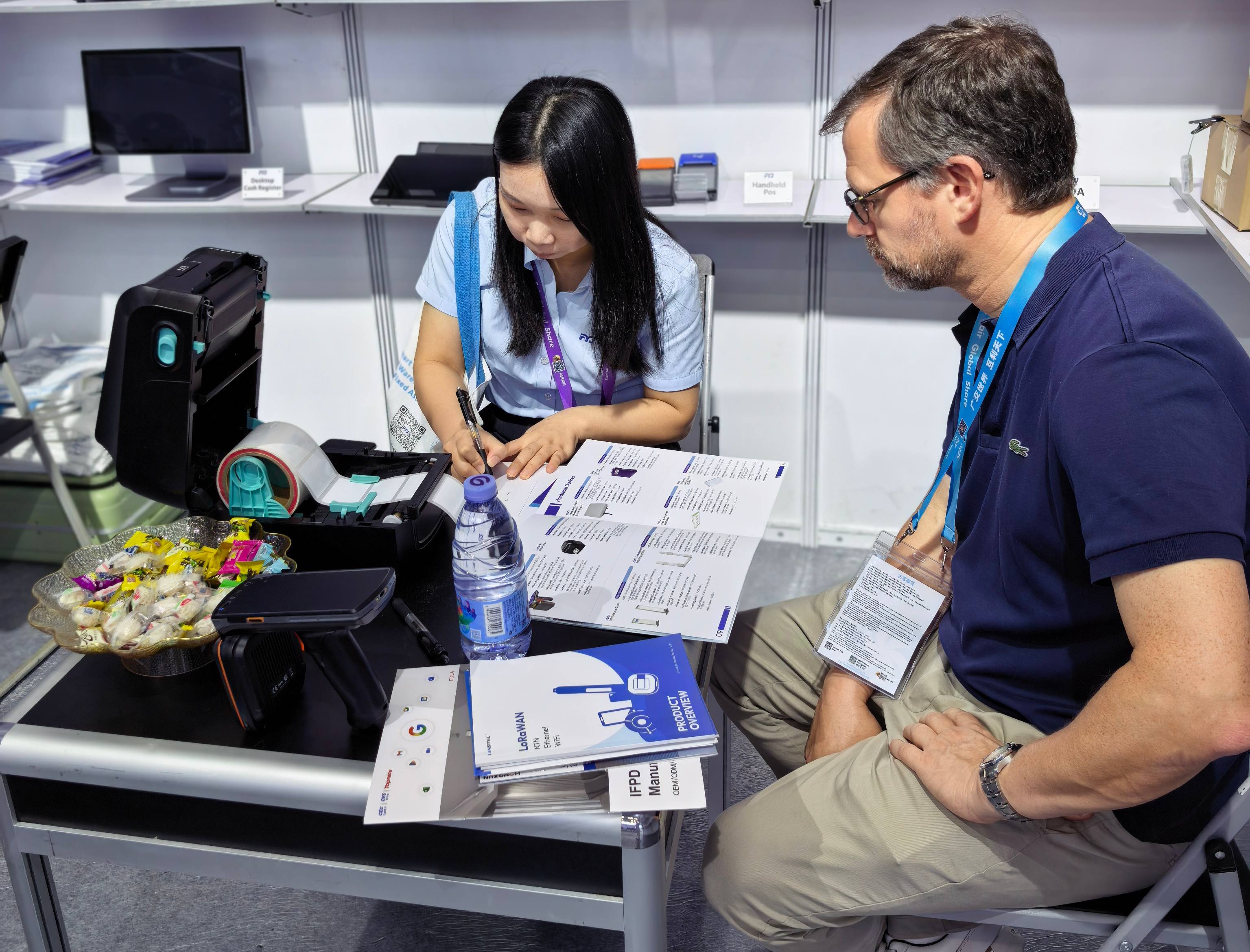
Visitors also watched RFID printers produce labels and examined RFID tag samples for different applications.
The demonstrations showed an important starting point for any RFID project:
the tag must fit the item and the way it will be used.
Size and appearance are only part of the decision. Product material, mounting surface, operating conditions and reading method can all affect tag performance.
During the fair, visitors discussed RFID applications involving warehouses, retail stores, jewelry, metal products and other environments. Some were looking for printer-and-tag combinations, while others took tag samples for further testing.
Showing printers, tags and readers together helped visitors understand RFID as a complete workflow rather than a collection of separate devices.
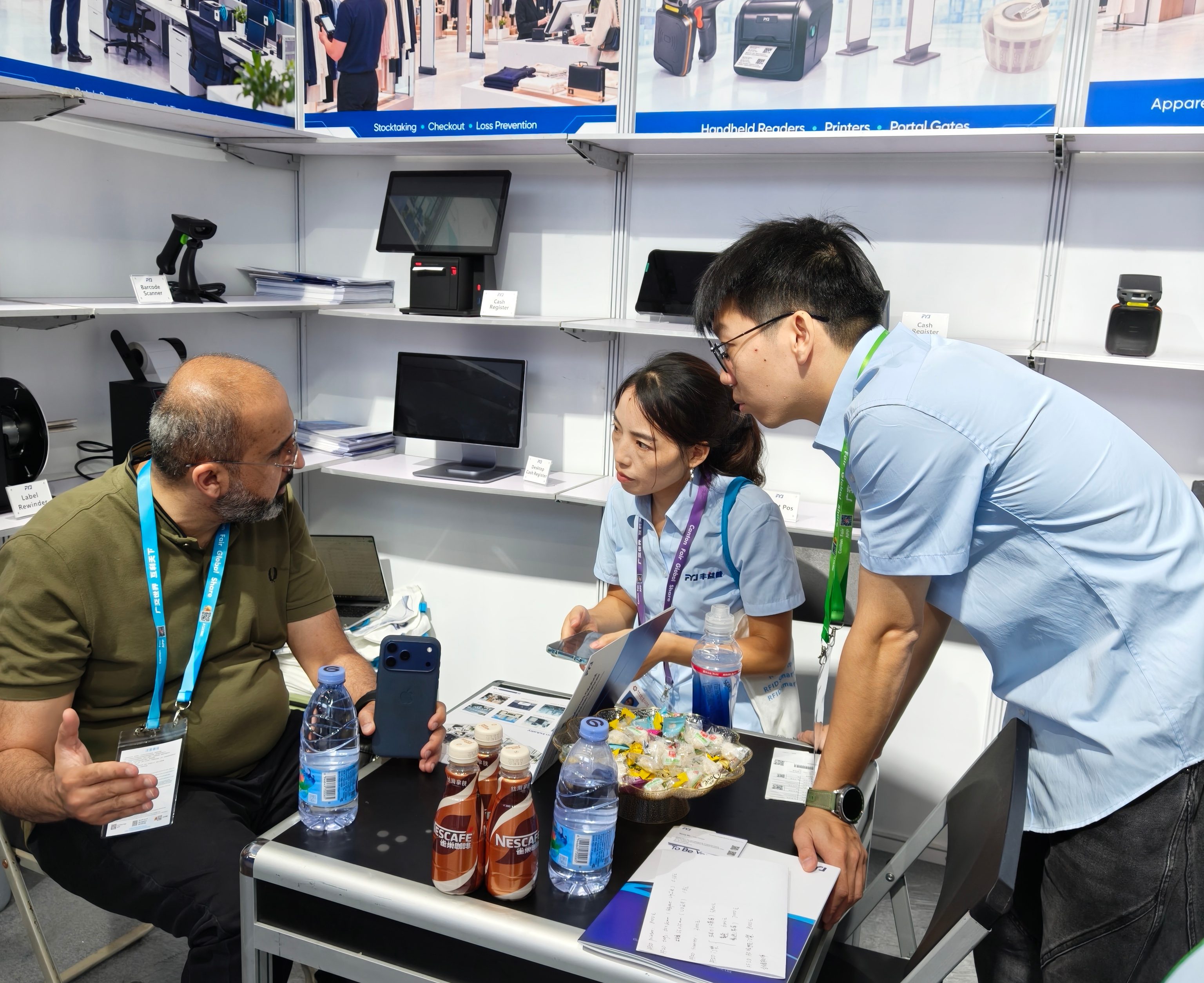
Many visitors came to the FYJ booth with a clear operational problem rather than simply asking what RFID could do.
Some were looking for a complete warehouse or retail system. Others already had ERP, WMS, POS or self-developed software and only needed RFID hardware, SDK support or API integration.
The enquiries covered situations such as:
These enquiries reflected the diversity of real RFID projects.
For some customers, the priority was faster stock counting. For others, it was automated goods movement, exception alarms, software integration or selecting the right RFID tag.
The exhibition records also included customers with their own development teams who wanted to purchase RFID hardware and integrate it into existing applications, rather than replace their current systems.
That is why FYJ’s discussions usually started with the workflow rather than with a product list.
FYJ presented three main application areas during the fair:
In the retail area, visitors explored POS terminals, RFID checkout equipment, handheld inventory devices and loss-prevention applications.
For warehouse projects, discussions focused on receiving, shipping, stocktaking, RFID gates, printers, tags and automated inbound and outbound records.
For fixed asset management, visitors discussed how RFID could connect physical items with digital records and make inventory checks more efficient.
One point appeared repeatedly across these conversations:
RFID does not need to replace barcode everywhere.
Barcode scanning may already work well for some operations. RFID becomes more valuable where batch reading, faster inventory checking or automated identification is required.
The right solution depends on how goods, assets and data move through the business.
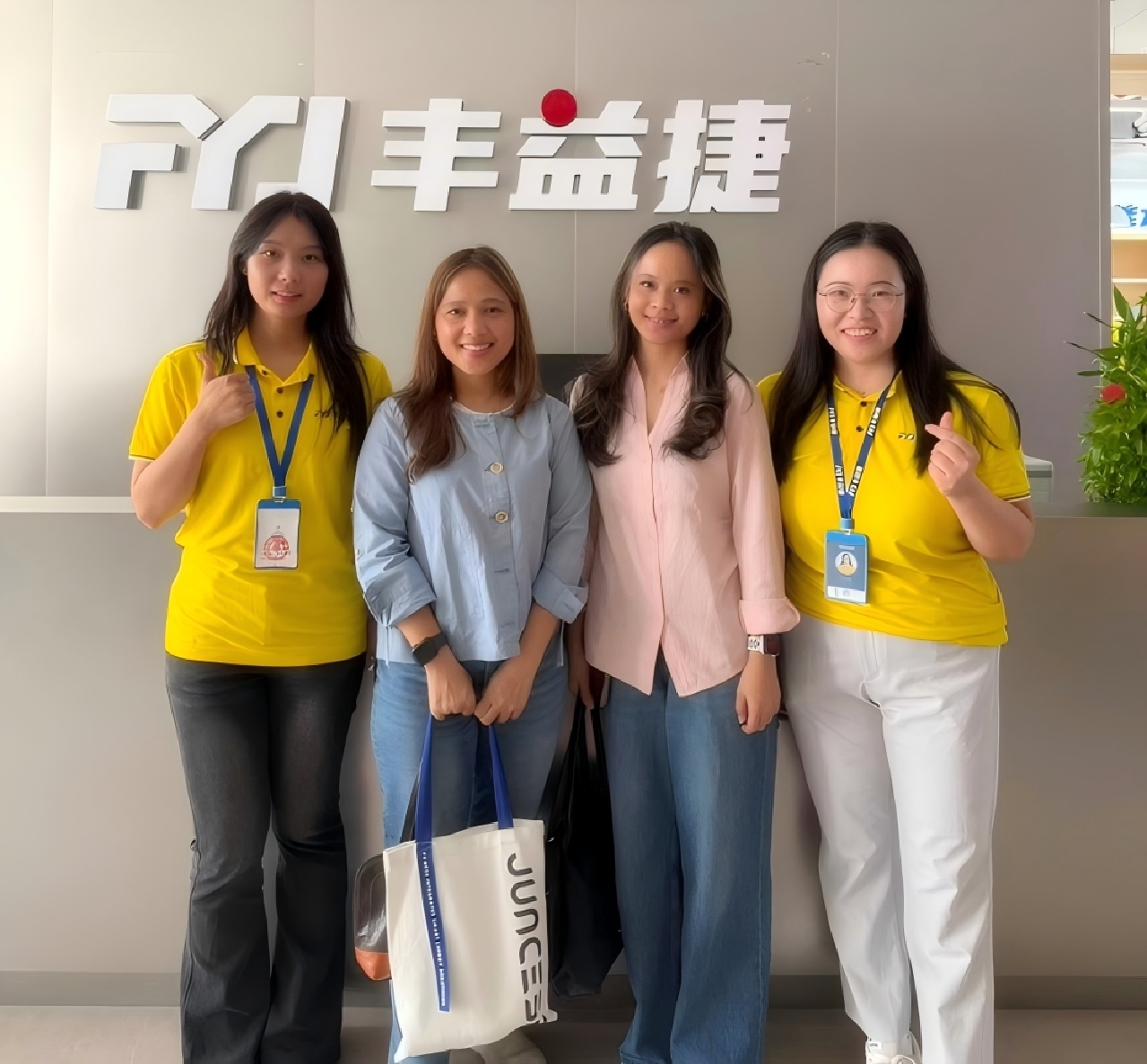
Some visitors continued their discussions at FYJ’s Guangzhou office during the exhibition period.
These meetings provided more time to review equipment, software and complete workflows beyond the initial booth conversation.
Two projects were particularly representative.
One visitor from Indonesia operates in the sheet metal cutting industry.
The customer was not only evaluating the solution for its own business, but also considering whether it could be recommended to its own customers in future warehouse projects.
During the visit, the discussion covered:
The focus was on how these functions could work together.
Automated identification could record goods movement, while outbound alarms could help identify abnormal movement.
Sound-and-light locating could help staff find specific goods more quickly, while temperature and humidity monitoring could provide additional visibility into warehouse conditions where required.
For the customer, understanding the connection between these functions was more important than evaluating each piece of hardware separately.
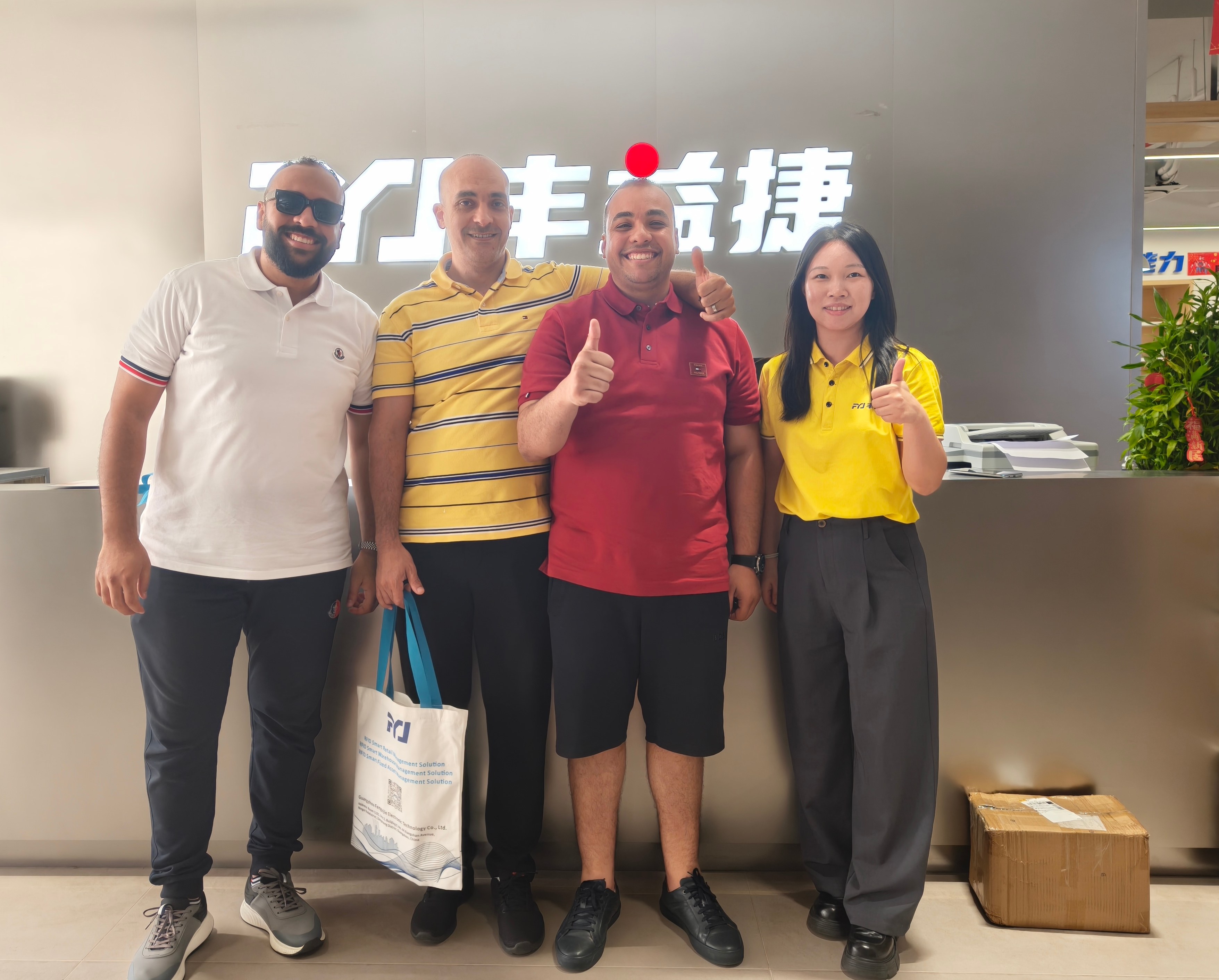
Another visitor from Brazil operates in the furniture hardware industry, with products such as door handles and related components.
A single package can contain multiple pieces of hardware, and the company plans to establish a dedicated storage area at its distributor’s warehouse specifically for its own products.
One of the proposed ideas was to install an RFID gate at the entrance of this storage area.
The goal would be to automatically record when goods enter and leave the warehouse, giving the supplier clearer visibility into product movement at the distributor’s site.
During the discussion, the customer showed particular interest in:
The dashboard was especially attractive because it could provide a clearer view of warehouse activity without relying entirely on manual records.
The customer also paid close attention to automated movement records and exception alarms, since these functions could help the company understand how its products move through the distributor-managed warehouse.
Another recurring topic at the fair was integration.
Many businesses already have ERP, POS, WMS or their own software platform.
For these customers, adopting RFID does not necessarily mean replacing the system they already use.
Depending on the project, FYJ can support several approaches:
API integration with an existing system
RFID-related data can be exchanged with the customer’s current software.
Using FYJ software for selected RFID workflows
This can suit customers that want RFID functionality without developing it internally.
Integrating FYJ hardware with customer-developed software
This approach can suit system integrators and companies with their own technical teams.
Several exhibition visitors specifically mentioned that they already had software and were looking only for RFID hardware or development support. 粘贴的 Markdown (1)
The right approach depends on interfaces, data requirements, development resources and the workflow itself.
FYJ thanks everyone who visited Hall 18.2, Booth J21, tested the equipment and shared their requirements during the 140th Canton Fair.
What stood out during the five-day exhibition was not simply the number of visitors, but the range of real business problems they brought with them.
Some wanted to reduce manual stock counting.
Some already had software and needed suitable RFID hardware.
Some were evaluating retail inventory and loss prevention.
Others were looking at RFID as part of a larger solution they could provide to their own customers.
The sales and technical teams are continuing to follow up with product information, application evaluations and configuration proposals based on these discussions.
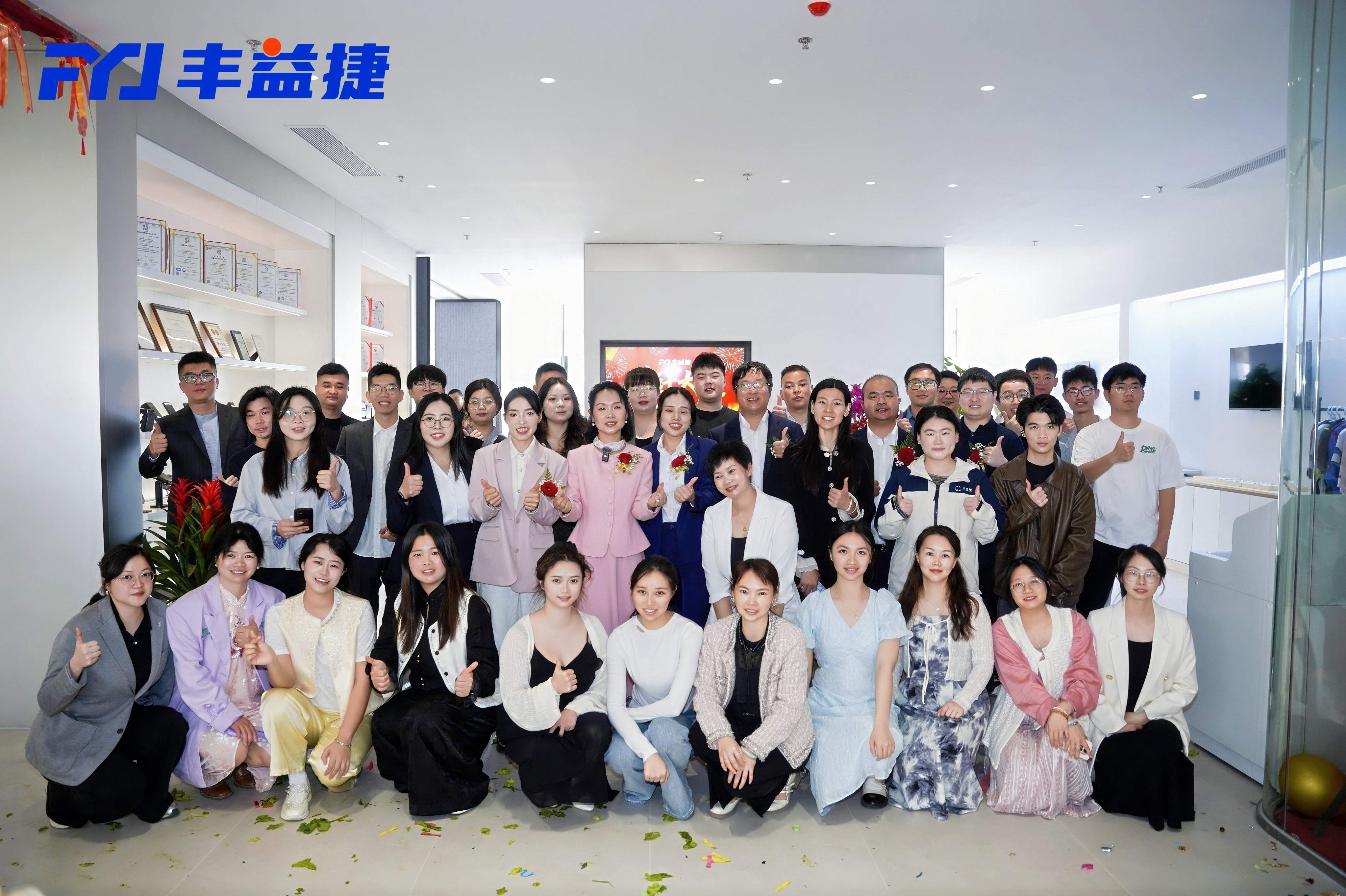
Customers and prospective partners are also welcome to visit FYJ in Guangzhou to explore the equipment and discuss their projects in more detail.
The exhibition has ended, but many of the conversations are only beginning.
Five days at the Canton Fair. New connections that continue beyond the exhibition.
Guangzhou Fengyijie Electronic Technology Co., Ltd. (FYJ) provides barcode and RFID hardware, software systems, implementation services and technical support for retail, warehousing and fixed asset management.
FYJ’s portfolio includes handheld terminals, RFID readers, printers, RFID tags and management software, with integration and customization services available according to project requirements.
Hi! Click one of our members below to chat on
 en


 IPv6 network supported